
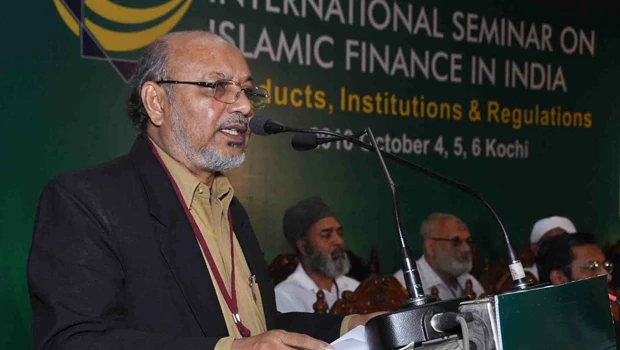
- KOCHI: Shariah-complaint microfinance cooperatives are making inroads in rural Kerala much to the relief of the poor and needy and the most interesting feature of it is that the bad debt is almost nil, according to a paper presented at the International Conference on Islamic Finance: Products, Institutions and Regulators that concluded here recently.
According to Mohammed Palath, a researcher in economics at the Kannur University in northern Kerala who made a presentation on the role of these collectives called nidhis have proved the best tool for poverty alleviation and financial inclusion.
The author who conducted a sample survey among fifty beneficiaries from five interest-free nidhis practicing Islamic microfinance in the tiny southern Indian state concludes that they were contributing immensely for poverty eradication in the state and are deeply rooted in the villages.
Under Nidhis, a common fund is formed by collecting savings or through donations and it is utilized to give microloans to the poor and the needy. Most of these loans are for consumption purposes or for meeting emergencies like hospitalization. Some are registered as a cooperative society or charitable trusts though most of them are unregistered.
Kerala has the highest number of interest-free funds which has now crossed 500 in number. These institutions lend money charging no interest, ranging from Rs 500 to Rs 25000, and without collateral securities. The borrowers pledge gold or personal securities undertaken by others.
There are local arrangements like paraspara sahaya nidhi (mutual help fund) or palisha rahitha nidhi (interest free fund) which are started and managed by different Muslim organizations, charitable trusts, Mahallu committees and social activists.
They pool in a small amount of money or try to collect as donations and grants from others and form a formal body and extend term loans to the needy for three months to a year.
Presently, there are 360 such units registered with Interest Free Establishments Coordination Committee (INFECC), recently formed to coordinate and guide them. Loans are used for small trades, renovation of houses, farming, self-employment, medical treatment and buying consumer durables.
The self-employment projects include vegetable cultivation, manufacturing of fast moving consumer goods like notebooks, umbrellas, schoolbags, school uniforms and textiles. Short-run loans are provided to individuals for various purposes on personal or mutual guarantee.
The INFECC gives directions for allowing loans, gives training to the local functionaries and ways to improve service and effectively manage funds. The loan amount could be as small as Rs 1000. Few of them lend Rs 10,000 to 25,000 a person. The small amounts are need for treatment, education, festivals and for bridging purposes.
Most of the loans are for creating self employment like purchasing bicycles for fish trading, cargo handling vehicle for daily wage workers (koolis), setting up small shops, purchasing auto rickshaws and repairing of houses.
In 2001, the then Kerala chief minister AK Antony, presently India's defense minister, inaugurated Alternative Investments and Credits Limited (AICL), the first such firm to be registered as a nonbanking finance company under the Reserve Bank of India, the country's central bank.
The company is working since 2003 exposing its funds to trading, manufacturing, real estate, rental buildings, educational institutions, exports and imports, fishing, healthcare, livestock and media besides extending micro-credits in the range between Rs 25,000 to Rs 100,000. It has also since been paying consistent dividends to investors.
The cases of defaults are very rare. Only one institution recorded such instances and it is very low percentage of total transaction. If the borrowers are not able to repay in time, the period is extended. Most of the borrowers are in the age group of 30 to 50. People get access to credit irrespective of caste and religion.