
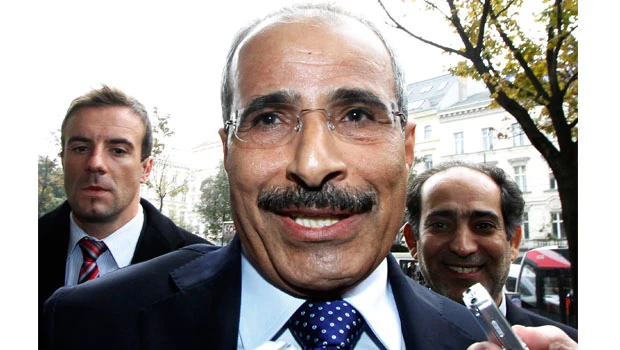
- VIENNA: OPEC oil ministers gathering for a meeting Thursday are expected to keep output targets unchanged to send a message of stability to energy-hungry economies that are just starting to emerge from recession.
OPEC countries are reluctant to shake confidence in the global economic recovery and have suggested this week that they are comfortable with current prices, which have hovered around $75-$85 per barrel in recent months.
Oil prices rose for a third straight day on Wednesday. US crude for November delivery rose $1.45, or 1.78 percent, to $83.12 per barrel by 12:10 p.m. EDT (1610 GMT), having traded from $81.68 to $83.45. In London, ICE Brent November crude rose $1.23, or 1.47 percent, to $84.73 a barrel.
Still, the weak dollar is a wild card. While OPEC shares concerns that an upward surge in oil prices could hurt an already weak economic recovery — and thereby reduce further demand — its member states, which sell their product in dollars, lose every time the US currency falls.
"The plunge in the dollar could throw the market a curve ball," said trader and analyst Stephen Schork, suggesting Thursday's meeting could at least weigh calling for a cut in response to the currency's weakness.
Crude's price, however, has been driven upward in recent days by investors fleeing the dollar into commodities, including oil. The higher cost roughly balances the currency's weakness, thereby weakening any rationale to drive prices higher by reducing production.
Furthermore, OPEC production tends to increase as the dollar falls, as producers ramp up output to compensate for lost revenue. Present compliance is estimated at little more than 50 percent.
That translates into overproduction of roughly 2 million barrels a day for a total daily output of about 27 million barrels.
"Everyone is happy with the market," Saudi Minister of Petroleum and Mineral Resources Ali Al-Naimi told reporters ahead of the meeting, suggesting he was against increasing output. And Sheikh Ahmed Al-Abdullah Al-Sabah of Kuwait, asked whether he was happy with what oil now costs, told reporters: "The price is good." Their comments dovetailed with those by OPEC Secretary General Abdalla El-Badrei, who said last month that the 12-nation producers' group is "comfortable" with current oil prices and does not want to "rock the boat" as the world fitfully recovers from its worst recession in decades.
"I think that they are going to leave things as they are, given that with the state of the economy any sort of hawkish rhetoric really runs the risk of running prices into the $90s," said Schork. "Given the lack of jobs especially in the United States, I don't think they want to rock the boat too much." Barclays Capital, in a report also said it did not expect "any change in the status quo of OPEC's policy on production." Any decision to opt for the status quo would leave production quotas unchanged since December 2008 Back then, OPEC announced the last of a series of cuts aimed at bringing its output down by 4.2 million barrels per day — a move that helped engineer a rebound in crude prices, which had collapsed to the low $30s from a mid-2008 high of almost $150 per barrel.
With the world economic recovery remaining weak, OPEC and International Energy Agency forecasts released this week see only slightly increased appetite for crude in the next two years, with both saying much of the growth will come from China and other developing nations.