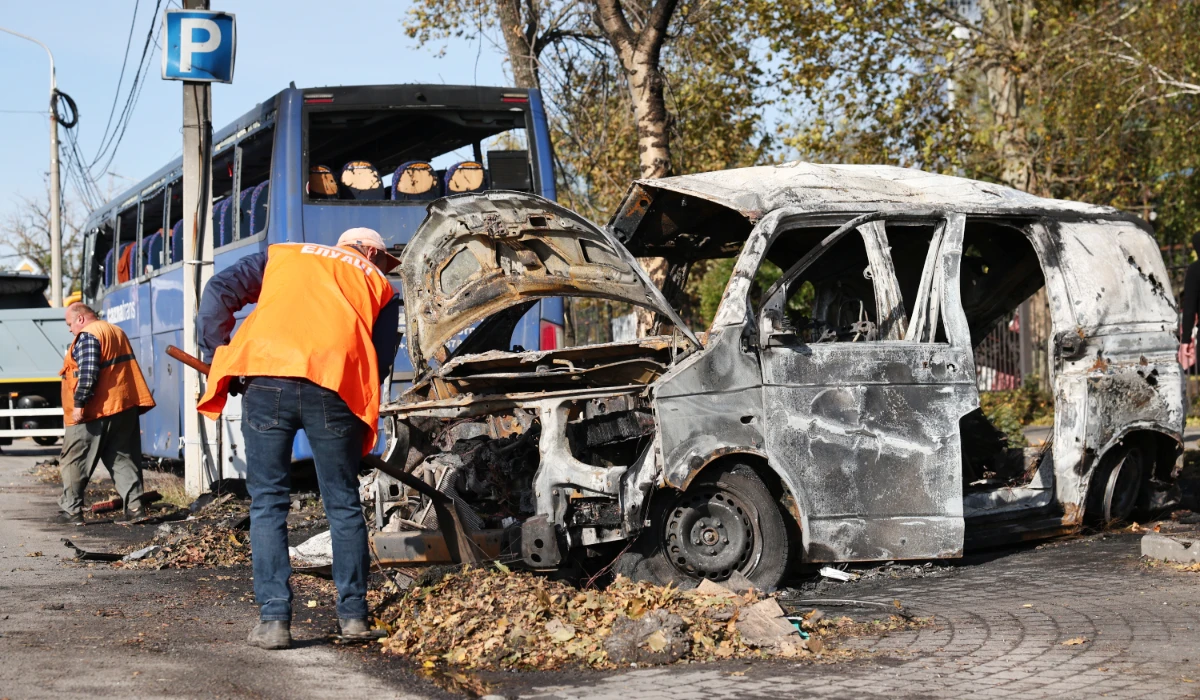
- MENTAWAI ISLANDS, Indonesia: Helicopters with emergency supplies finally landed Wednesday on the remote Indonesian islands slammed by a tsunami that killed at least 272 people, while elsewhere in the archipelago the toll from a volcanic eruption rose to 30.
President Susilo Bambang Yudhoyono cut short a state visit to Vietnam to rush home to deal with the dual disasters that struck Indonesia within 24 hours, straining the country's ability to respond.
The first aerial surveys of the region hit by the 10-foot tsunami revealed huge swaths of land underwater and the crumbled rubble of homes torn apart by the wave. One house lay tilted, resting on the edge of its red roof, with tires and slabs of concrete piled up on the surrounding sand.
Two days after an undersea earthquake spawned the killer wave, the casualty count was still rising as rescuers landed for the first time on the Mentawai Island chain, which was closest to the epicenter and the worst hit. Bad weather had kept them away previously.
The first cargo plane loaded with 16 tons of tents, medicine, food and clothes arrived Wednesday afternoon, said disaster official Ade Edward. Four helicopters also landed in Sikakap, a town on North Pagai Island, which will be the center of relief operations.
"Finally we have a break in the weather," Edwards said, adding that he hoped search and rescue operations would finally pick up pace. "We have a chance now to look for the missing from the sky and also to survey the extent of the damage."
About 1,300 km to the east in central Java, disaster officials were scouring the slopes of Indonesia's most volatile volcano for survivors after it was rocked by an eruption that killed at least 30 people, including an old man who refused to abandon his ceremonial post as caretaker of the mountain.
Mt. Merapi erupted at dusk Tuesday, sending up searing ash clouds and killing more than two dozen people.
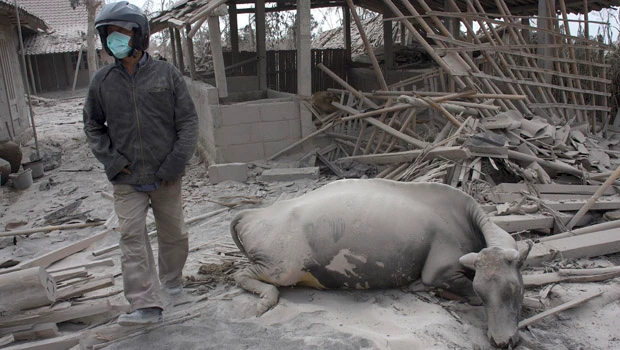
Authorities warned the thousands who fled Merapi's wrath not to return during Wednesday's lull in volcanic activity, but some villagers were desperate to check on crops and possessions left behind. In several areas, everything — from the thinnest tree branches to chairs and tables inside homes — was caked with ash that looked like powdery snow.
Among the dead was Maridjan, an 83-year-old man who had been entrusted by a highly respected late king to watch over the volcano.
The latest blast Tuesday night eased pressure that had been building up behind a lava dome perched on the crater. But experts warned the dome could still collapse, causing an avalanche of the blistering gas and debris trapped beneath it.
"It's a little calmer today," said Surono, the chief of Center for Volcanology and Geological Hazard Mitigation. "No hot clouds, no rumbling. But a lot of energy is pent up back there. There's no telling what's next."