
- HIROSHIMA: Mazda Motor Corp.
- (MMC) is installing next-generation technologies, called Skyactiv, in most of its new vehicles.
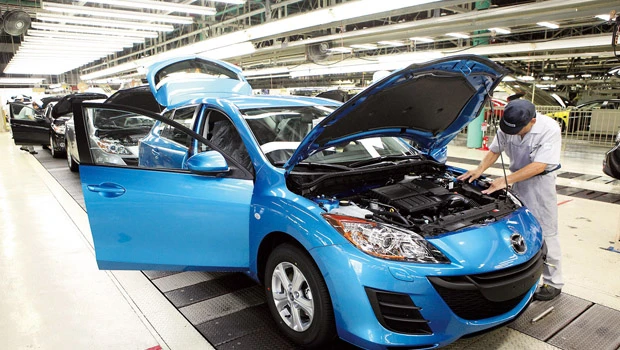
Skyactiv is a blanket term for Mazda's innovative next-generation technologies that are being developed under the company's long-term vision for technology development - Sustainable Zoom-Zoom," he said. Sixty-five journalists from Saudi Arabia, the UAE, South Africa, Malaysia, Indonesia, Thailand, Philippines, Ecuador, Peru and Colombia attended the forum. They also visited Mazda's "People-friendly" Hofu plant where cars are made with robotic engineering and in harmony with the natural surroundings.
"The Skyactiv name is intended to reflect Mazda's desire to provide driving pleasure as well as outstanding environmental and safety performance in its vehicles. To achieve this goal, Mazda has implemented an internal Building Block Strategy (BBS) to be completed by 2015. This ambitious strategy involves the comprehensive optimization of Mazda's base technologies, which determine the core performance of it vehicles, and the progressive introduction of electric devices such as regenerative braking and a hybrid system. All the technologies that are developed based on the BBS will fall under the Skyactive umbrella," Yamanouchi added.
He added: "Mazda is renewing its entire powertrain and platform lineup at the same time as revolutionizing every manufacturing process from R&D through to mass production. There have been no compromises in addressing conflicting goals. Instead, we have implemented a 'breakthrough' approach to technical innovation in all areas that has produced incredible results. One of our success stories is the next-generation engine that will first appear in the Mazda Demio, which goes on sales in the first half of 2011. Achieving an outstanding 30 km per liter fuel economy, the Skyactiv Demio will be a fun-to-drive fuel sipper that will satisfy anyone's desire for driving pleasure. And there will be many more exciting new products coming to the Mazda lineup in the years ahead."
The automaker expects to see favorable sales mainly in China and Southeast Asian nations in the current fiscal year ending March next year, despite a strong yen and the end of a government subsidy program to encourage the purchase of new eco-friendly cars in Japan. "Though we have estimated global sales of 1.27 million units, looking at the current trend, sales are likely to exceed that level," Yamanouchi said.
The first, the company's new BT-50 double-cab pickup, which, according to assistant manager Middle East and Africa Sales Masao Harada, is to be put into production in South Africa by the final quarter of 2010, is certainly a "bakkie" like no other in its segment. Designer Ryo Yanagisawa said it was inspired by a lion's photo.
"We aimed at creating a 'sophisticated beast', a pick-up with the design characteristics of a sportscar, inside and out," he said. "The outgoing model is functional but lacks 'zoom-zoom'. This vehicle has more dynamism, like a lion leaping at its prey."
The front end, with its aggressive grille, is inspired by the Shinari, a dramatic four-door coupe design study also shown at the forum. The interior, too, carries design cues from the Shinari, making it more sporty car than pick-up inside.
Shinari's creator is none other than Mazda's GM, Design, Ikuo Maeda, the man who styled the RX-8 (his father, incidentally, styled the RX-7, so he has "zoom-zoom" in his genes). The sporty four-door was inspired by another African predator, the cheetah, said Maeda. He described the style as "kodo", Japanese for "soul of motion."
Mazda, he added, would be using this design language on its future models. The first is the BT-50 that big, bold "bakkie with a difference," Seita Kanai, director, senior managing executive officer in charge of R&D and program management at MMC, said.