
- SEOUL: Muslims may constitute a small minority in South Korea, but Islam's appeal is spreading rapidly among its people.
From Japanese colonial times, Itaewon, a cosmopolitan district in south-central Seoul, has been a major residential area for people from abroad. It once housed Japanese barracks and after 1945 a large compound in the district became the property of the US Army. Its neighborhood has developed as a magnet for all kinds of foreign residential activity in Seoul.
"Itaewon is dominated by a building that is unmistakably a mosque. This impressive building is a reminder of the resurgence of the Muslim community here," says a local imam.
Islam has been present in this country for a very long time. In the 8th and 9th centuries, Arab sailors and merchants often frequented the coastal waters of South and East Asia and a number of them made it their home.
The resurrection of Islam took place during the Korean War (1950-53). The war was fought largely by US forces, but with support from other countries, among them Turkey, at that time a close US ally. The Turkish forces introduced Islam to Korea. They proved to be not only good fighters but also successful dawa workers. Their "tent mosques," which initially served the soldiers themselves, eventually became major centers of their dawa activity.
When the war ended and the Turkish units returned home, they left behind a small but active local Muslim community. The Korean Muslim Society was officially inaugurated in 1955. This body, later renamed the Korean Islamic Foundation, became the major organization here.
In the 1970s, the first permanent mosque was established in Itaewon, constructed with a grant provided by Saudi Arabia and opened in 1976. At that time it was one of the most remarkable buildings in the entire city, and is still impressive.
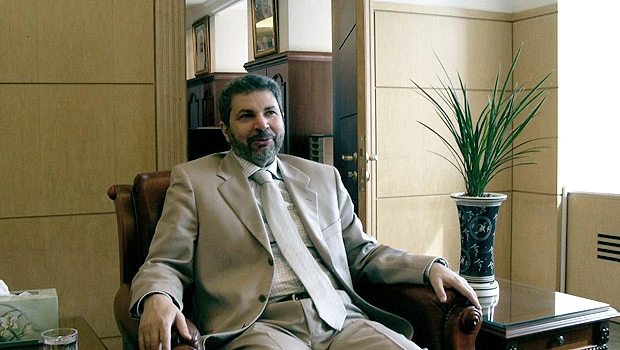
Pointing at the mosque from his office was Saudi Ambassador Ahmad Y. Al-Barrak who had newly assumed charge in Seoul after serving in Geneva for seven years. "Korea is a nice country with nice weather and nice people," Al-Barrak told Arab News in a recent interview in the South Korean capital.
The country has nine mosques for Muslims estimated between 120,000 and 150,000. About 400 of them are heading for Jeddah to perform this year's Haj, he said.
Bilateral relations are strong, with Korean companies active across Saudi Arabia, especially in construction and development projects notably in Jubail and Yanbu. Saudi companies, including Saudi Basic Industries Corporation and Saudi Aramco, also have a strong presence across Korea, said Al-Barrak whose diplomatic career spans 30 years.
"The Kingdom's strong economy and its ongoing development projects, especially at the King Abdullah Economic City and other new cities have generated a lot of interest among Korean businessmen," he said, adding that in just six weeks 189 visas were issued to them to visit the Kingdom.
Al-Barrak said about 100 Saudi students were studying at different universities in Korea pursuing engineering and technical courses, some of them under the King Abdullah Scholarship Program. Ten of them are pursuing medical studies.
A cultural mission was recently opened at the embassy with Turki Fahad Alayyar as cultural attaché. Its tasks include facilitating cultural, student and teacher exchange programs between the two countries, aside of course from promoting Saudi culture and tradition. Some 200 students are studying Arabic at five Korean universities.
"An increasing number of Koreans are learning the language," Alayyar said, adding that Saudi students in Korea learn Korean for the graduate studies and English language for postgraduate studies, including master's and Ph.D. The Kingdom is the only Islamic and Arab country participating in the Seoul National Book Fair every year, he said, adding: "We showcase the Kingdom's rich culture and heritage with a focus on halal food and Islamic banking."