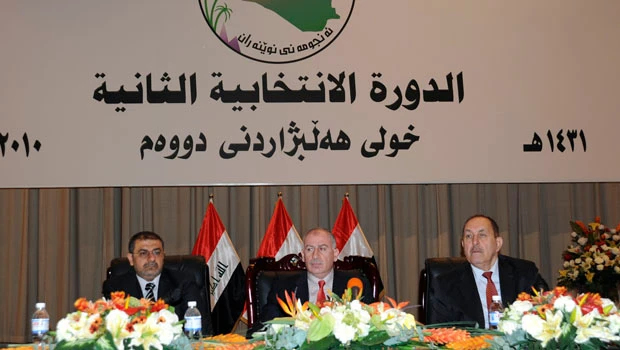
- BAGHDAD: A Sunni-backed political bloc said Saturday it will join efforts to produce a national unity government, backing away from a threat to boycott Parliament.
Iraqiya's decision raised hopes that lawmakers could resolve disputes that have threatened to derail an agreement intended to bring all of Iraq's major blocs into the government. The deal announced this week ended an eight-month impasse that had stalled the formation of a new government, but almost immediately began to unravel when Iraqiya walked out of the session.
The months of political jockeying after inconclusive March 7 parliamentary elections have left Iraqis disillusioned amid fears the sidelining of the minority Sunni community could stoke more violence.
Lawmakers reconvened on Saturday, two days after many Iraqiya members walked out of a Parliament session over what they said were broken promises by Prime Minister Nuri Al-Maliki's coalition.
President Jalal Talabani went ahead and nominated Al-Maliki to form the new government, despite the walkout. Al-Maliki now has a month to allocate ministerial posts.
"There was a misunderstanding in the last session," Iraqiya spokesman Haider Al-Mulla told lawmakers. "We here stress that we will take an active part in producing a national unity government."
The statement indicated Iraqiya will participate in Al-Maliki's new Shiite-dominated administration, although it was not clear what role the Sunnis will play.
Iraqiya lawmaker Wahda Al-Joumaili said the Sunni-backed list will participate in the government if Al-Maliki's alliance will adhere to what she said were previous agreements allocating Iraqiya some of the more influential ministries.
The comments Saturday by many Iraqiya members appeared to backtrack somewhat from a statement late Friday by bloc's leader, former Prime Minister Iyad Allawi. He told CNN television that the concept of power-sharing, referring to efforts to give Iraqiya a significant role in the new government, is dead.