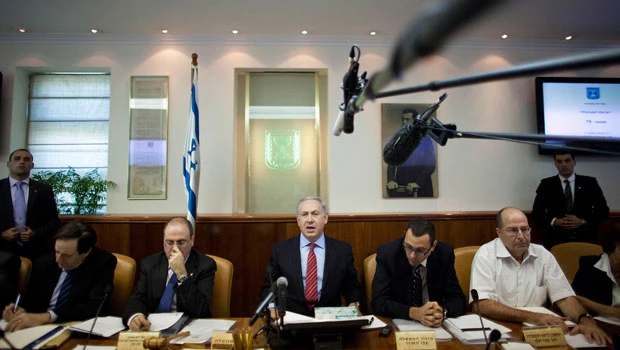
- JERUSALEM: Israel's prime minister briefed his Cabinet Sunday on a package of security and diplomatic incentives the US has proposed to entice Israel to renew limits on settlement construction and revive moribund peace talks with the Palestinians.
The proposed 90-day moratorium could give both sides time to work out an agreement on the future borders of Israel and a Palestinian state, making it clear where Israel can continue to build and where it cannot. But the plan swiftly ran into opposition from Palestinians and Israeli Cabinet members alike.
The Palestinians were unhappy because the proposed construction curbs would apply only to the West Bank, not East Jerusalem, their hoped-for capital. Still, they did not reject it outright, saying they would consult among themselves and with Arab leaders.
Rumblings of opposition also came from hawkish members of Israeli Prime Minister Benjamin Netanyahu's coalition, with one small party reportedly threatening to quit if the deal went through.
Netanyahu told his Cabinet that details of the proposed deal were still being finalized by Israeli and US teams. He said when the proposal was complete, he would bring it before an inner Cabinet of decision-makers.
"Every proposal will consider the security needs of the state of Israel, both immediate needs and threats in the coming decade," he said.
Palestinian negotiator Saeb Erekat said the Americans had not officially relayed details about the proposal to the Palestinians, but "they know we have a major problem in not including East Jerusalem." He said Palestinian President Mahmoud Abbas would put the US plan before Palestinian decision-makers and call for an immediate session of Arab League officials before announcing an official decision.
Peace talks ground to a halt in late September, just three weeks after they began at the White House, after Israel resisted US and Palestinian pressure to extend a 10-month moratorium on new construction in the West Bank.
The Palestinians refused to return to the negotiating table if construction resumed on land they want for a future state and gave the US until later this month to come up with a formula to salvage the talks.
The diplomatic climate soured even further last week after Israel pressed ahead with plans to build 1,300 apartments in east Jerusalem.
Last week, Netanyahu met with US officials in an effort to break the impasse and held a seven-hour meeting with Secretary of State Hillary Rodham Clinton. He returned with a US proposal to renew the moratorium in exchange for a White House pledge to ask Congress to sell Israel 20 stealth fighter jets for $3 billion, Cabinet Minister Yuli Edelstein told The Associated Press.