
- MINA: Makkah Gov.
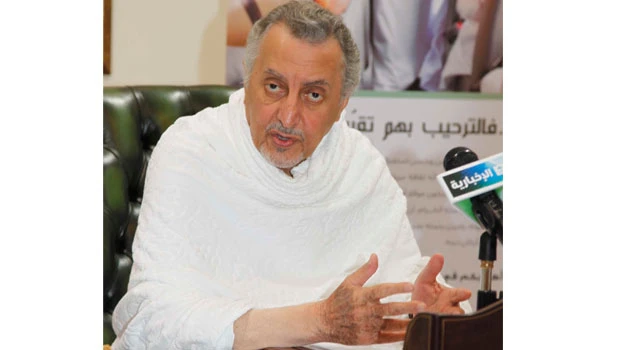
- Prince Khaled Al-Faisal, who is also chairman of the Central Haj Committee, congratulated the Kingdom’s rulers for the successful manner in which pilgrims reached Mina on the first day of Haj, the Day of Tarwiyah.
In a press meeting to mark the event, Prince Khaled also congratulated pilgrims for concluding the initial part of their Haj rites in a comfortable manner.
The prince noted that the passage of millions of people was achieved mainly because of the ban on small vehicles on roads to the holy sites and the close supervision of the authorities.
Vehicles carrying less than 25 pilgrims are not allowed to enter the holy sites, according to Haj regulations.
The prince said the Mashair rail project, completion of the fifth floor of the Jamrat Bridge, the third phase of the chain bus service for pilgrims in Makkah and the air ambulance service were the most significant achievements of this year’s Haj.
“These projects will undoubtedly help smoothen the movement of traffic,” he said.
He also affirmed the success of the rain and floodwater drainage project in Makkah and the holy sites. “Matters are becoming better and better, and there are more achievements,” the prince said.
He also commended the signing of the contract to renovate the King Abdulaziz International Airport in Jeddah at the cost of SR27 billion as this would help end travel problems for citizens and foreign travelers including pilgrims.
Speaking about penal measures against violations such as people performing Haj without permits, the prince said emphasis will be on educating the public about the regulation rather than on punishing them.
“The permit system was introduced only two years ago. Considerable effort has been made to make it work. Awareness about its importance could not be achieved in one or two days nor in one or two years,” he said.
The prince also said that efforts to eradicate the practice of squatting have been becoming more and more successful year after year.
He said studies are underway to build residential accommodation in Mina, improve transportation in Makkah and linking the city’s transportation system to the holy sites.
The prince also stressed the need for all Muslim countries to implement effective programs to fully educate pilgrims on matters of Haj before pilgrims leave their countries.