
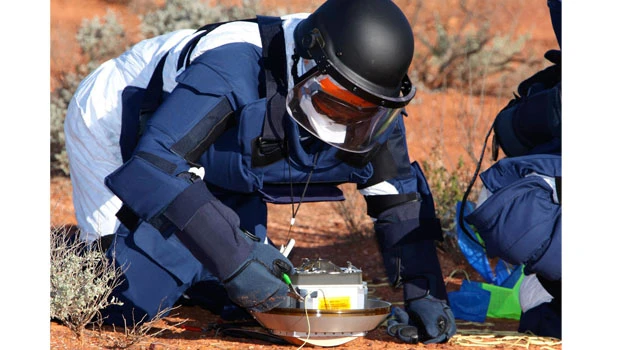
- TOKYO: A Japanese spacecraft that returned to Earth in June successfully captured dust from an asteroid for the first time in history, scientists said Tuesday.
They said an analysis of samples brought back by the Hayabusa spacecraft showed some came from an asteroid called Itokawa, which could offer insight into the creation and makeup of the solar system. It is only the fourth set of samples to be returned from space in history — including moon matter collected by the Apollo missions, comet material by Stardust, and solar matter from the Genesis mission.
The spacecraft’s capsule landed successfully in the Australian Outback in June after a seven-year, 4 billion-mile (6 billion-kilometer) journey, despite a series of technical glitches that threatened the mission.
“These results have exceeded our expectations. I’m not sure how you express something that surpasses your dreams, but I’m filled with emotion,” project chief Junichiro Kawaguchi said.
Hayabusa, launched in 2003, reached Itokawa in 2005. After taking photos of the 1,640-foot (500-meter) -long asteroid, Hayabusa landed on it twice in November 2005. The spacecraft then limped home after developing a fuel leak and losing contact with Earth for seven weeks.
The craft was designed to shoot a bullet into the surface of the asteroid that would crush and propel material through a long tube into a sample collection container.
There is no certainty the bullet actually fired, scientists say, but they believe the impact of the tube’s landing would have forced some material upward and into the collection chamber.
JAXA, the Japanese space agency, said the aim of the $200 million project was to understand more about the origin and evolution of the solar system. Scientists hope to study how and when the asteroid was formed, its physical properties, what other bodies it may have been in contact with, and how solar wind and radiation have affected it.
Experts from NASA and Australia were also involved in the mission.