
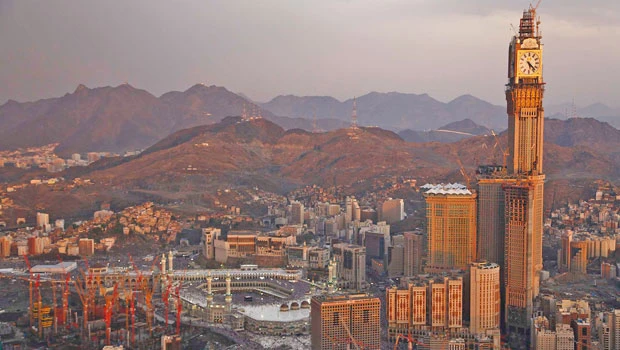
- MAKKAH: Ahmad Raidi or Abu Muhammad has rightly been called the photographer of the Two Holy Mosques.
- His camera has always been focused on the holy city of Makkah.
It is not an exaggeration to say that no development works or major changes have happened to the Grand Mosque in Makkah or the Prophet’s Mosque in Madinah over the past 30 years without being captured by Abu Muhammad.
These rare pictures, in various sizes and shapes, can be seen in the homes of Haj and Umrah pilgrims across the world.
Arab News met Abu Muhammad at a hotel close to the Grand Mosque in Makkah. He was carrying a number of posters and pictures of Makkah.
“They’re all about the Grand Mosque and other major sites in the holy city, some of which date back beyond 25 years. The latest pictures include various shots taken during the current Haj, especially those taken in the background of the Makkah Clock Royal Tower,” he said.
“It is a great honor for me to have possession of some unique and rare pictures of the Grand Mosque. These pictures are a blend of my passion for photography and the spiritual quest to spread the message of the Grand Mosque around the world. There are thousands of pictures that have been taken over the past 30 years. I take their prints in various sizes and shapes and sell them to pilgrims in accordance with their orders,” he said.
Abu Muhammad recalled that the idea of selling photographs of the Grand Mosque struck him about 15 years ago when a mutawwif approached him. “He asked me to make available 50 cm pictures of the two holy mosques. His plan was to inscribe his name on them and present them to pilgrims as gifts,” Abu Muhammad said.
Some pilgrims, especially the middle-aged and the young, want to buy CDs of rare pictures of the Grand Mosque, he added.
Abu Muhammad said his customers include pilgrims of various nationalities and groups. “Some of them have contacted me after obtaining my phone number from friends and relatives, who performed Haj or Umrah in previous years,” he said, adding that he often visits Madinah to take photographs.
According to Abu Muhammad, most of his customers are pilgrims from Europe, America, Canada and Australia.
“They are eager to keep pictures of the Grand Mosque as souvenirs of their lifetime journey to the holiest mosques. They want to decorate their houses and offices with these pictures and keep the memories of their spiritual journey alive throughout their lives,” he said.
Speaking about the price of these pictures, he said they are nominal. “I charge a small profit margin on top of the production cost. My mission is to have a role in linking pilgrims from all over the world to the holy cities forever by ensuring these pictures are in their homes and offices,” he said, adding that taking pictures of the Grand Mosque has always remained a passion and zeal as well as competition among several talented photographers whose snaps reflect the depth of their vision about the holy cities and mosques.
Abu Muhammad, who is in his 50s, wishes to remain in the vicinity of the Grand Mosque and continue photographing its massive developments until his last. He has turned down several offers to work as photographer of leading Saudi dailies.
“I’ve never bowed down to pressure to go and work in cities and countries outside Makkah,” said Abu Muhammad.