- MAKKAH: One of the rites of Haj involves the sacrifice of animals.
- With thousands of animals slaughtered during the annual pilgrimage, a large amount of sacrificial meat is distributed among the poor in Makkah.
However, some unscrupulous people take this as an opportunity to store carcasses, which they sell on to butchers and eateries at nominal rates.
Those behind this racket tend to be African migrants who live in some of the poorest neighborhoods of Makkah. With limited or no access to proper refrigeration, much of this meat goes off before it reaches restaurants.
The slaughtering of sacrificial meat begins from the morning of Dul Hijjah 10 (the day of sacrifice) and continues until the evening of Dul Hijjah 13. Sacrifice also takes place following Haj, as a form of penance in lieu of mistakes committed by pilgrims while performing their rites.
Most pilgrims perform the ritual sacrifice by buying coupons from the Islamic Development Bank (IDB), which has been supervising the Saudi Project for Utilization of Sacrificial Meat for some years. Meat from animals slaughtered by the IDB is packaged and sent abroad for distribution.
Other pilgrims, however, sacrifice animals after buying them directly from livestock dealers. As a result, much of the meat from such animals ends up in the hands of the livestock dealers who then sell the meat on to local restaurants at nominal prices. Restaurants tend to buy large amounts of meat, which they then cook and use in the meals they prepare.
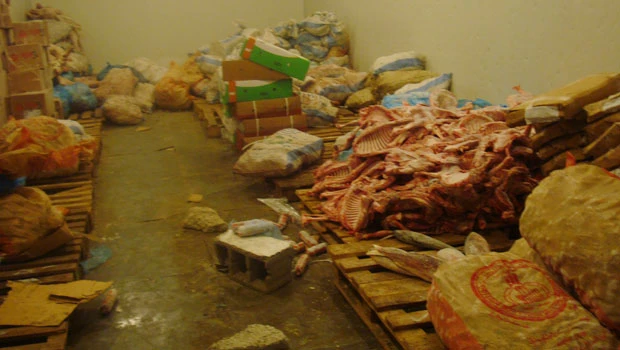
Overstayers generally store the meat in unhygienic conditions and then sell on to other illegal residents. These groups compete with each other in collecting huge quantities of sacrificial meat at nominal rates of around SR500 for 1,000 kg which then resell later for around SR30 per kg.
“The people of Makkah have a tradition of refraining from eating meat in restaurants for a couple of weeks after Haj is over,” said Fahd Al-Husseini, a Makkah resident.
“This is mainly because of our fear that some of these restaurants serve customers surplus sacrificial meat that has been stored unhygienically,” he said, drawing attention to press reports about the seizure of large quantities of meat that have not been stored properly after Haj.
“This happens because of pilgrims who do not use the IDB sacrificial program. Their sacrificial meat ends up in the hands of these illegal traders who earn lots of money by selling the meat on,” he said.
Mashhur Al-Qassim, another Saudi citizen, said there is a need to make pilgrims from abroad aware of the IDB-supervised sacrificial meat program. “This would stamp out the illegal trade. Illegal residents store this sacrificial meat in dirty conditions after renting out rest houses located outside Makkah,” he said.
His views were echoed by Naif Hussein, another local Saudi, who urged the authorities to introduce strict measures to stamp out the problem and punish those involved.
The Makkah municipality, in coordination with concerned agencies, is striving to put an end to the illegal sale of sacrificial meat. As a result, the Makkah governorate has issued directives to confiscate any vehicles found to be involved in the transport of sacrificial meat from Makkah to other cities.