
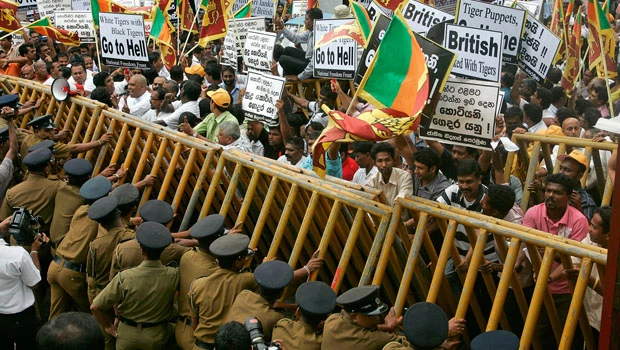
- COLOMBO: Hundreds of pro-government Sri Lankans led by a Cabinet minister rallied outside the British High Commission on Friday, condemning what they say is London’s support for Tamil separatists abroad.
Construction and Housing Minister Wimal Weerawansa accused the British government of silently supporting sympathizers of the defeated Tamil Tiger rebels by allowing them to stage a protest in London against President Mahinda Rajapaksa during a visit this week.
“We all have taken to the streets against this uncivilized act of (the) British government,” he said after Friday’s protest march in Colombo. He described the protesters as “terrorists” and said they should not be allowed to demonstrate as the Tamil Tiger group is banned in Britain.
Last year, Sri Lankan government forces ended a 25-year civil war, routing the rebels who were fighting for a separate homeland on the Indian Ocean island where they have long faced discrimination by the Sinhalese majority.
Rajapaksa had been due to address the Oxford Union debating society this week, but the event was canceled. The union said in a statement that “due to the sheer scale of the expected protests, we do not feel that the talk can reasonably and safely go ahead as planned.” The British High Commission said in a statement Friday that the British government had no involvement in the decision to cancel Rajapaksa’s address. A spokesman could not immediately be reached for comment on Weerawansa’s allegations.
Rajapaksa has become an increasingly dominant figure in Sri Lanka. After the crushing military defeat of the rebels, he has easily won re-election. His chief political rival and former army chief is now serving a jail sentence for 30 months, after being convicted by a military court. Critics say the case amounted to a political vendetta.
Rajapaksa’s government has resisted international calls for an independent examination of suspected rights abuses committed during the civil war, by both the Tamil Tigers and government forces.
The United Nations says at least 7,000 civilians were killed in the last five months of the war, and rights groups have accused government forces of deliberately shelling civilians and hospitals and depriving them of food and medicine.