- BAGHDAD: Bombs killed 17 people across Iraq’s capital on Saturday, including Iranians near a shrine and shoppers at a Shiite neighborhood market, authorities said.
The attacks — several roadside bombs and cars packed with explosives — wounded more than 100 people. Most of the casualties were likely Shiites, a frequent target of insurgents who have long sought to provoke civil war in Iraq.
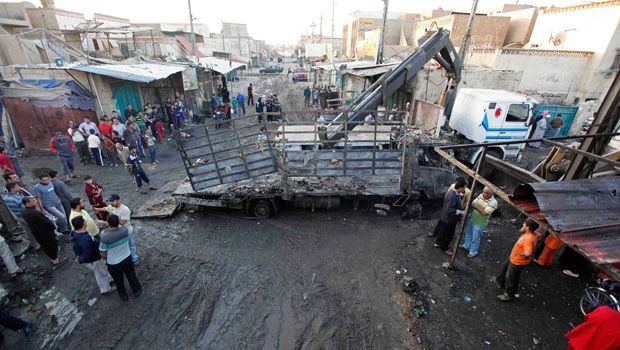
Police said the deadliest strike targeted a marketplace in Baiyaa, a district in southwestern Baghdad. A car parked outside a shopping area exploded around midday, killing six people and wounding 42. Hospital officials confirmed the casualties.
An hour earlier, near-simultaneous blasts hit two groups of Iranians near the gold-domed Moussa Al-Kadhim Mosque in the neighborhood of Kazimiyah, according to security forces. A pair of bombs killed five Iranians resting near the shrine. A car exploded next to a bus carrying Iranians in the nearby area of Shula, killing another three people.
Police and medical officials said those two attacks wounded 52 people.
“Seeing many seriously wounded women and children made me forget about my wounds and rush to help,” said Ali Shalal, 24, a college student who was hit in the eye by shrapnel by the bomb in Shula. “We were told to stay away fearing more bombings.”
Earlier, police said a roadside bomb targeting a judge’s security convoy in downtown Baghdad killed three people, including two guards, and wounded seven passers-by. The judge was not in the convoy as it drove through Karradah, an area of mixed-ethnicity.
The bombings came as German Foreign Minister Guido Westerwelle led a group of German lawmakers and business leaders on a one-day trip to Iraq for meetings with senior leaders, including President Jalal Talabani and Prime Minister Nuri Al-Maliki.
Westerwelle told reporters after talks with Iraqi Foreign Minister Hoshyar Zebari that Berlin considers Iraq “an important partner, and we are determined to continue this support.” Germans vigorously opposed the 2003 US-led invasion of Iraq but began boosting relations after President Barack Obama, a Democrat, took over for President George W. Bush, a Republican who pushed for the war.