- TEHRAN: Iran announced what it called a major step forward in its nuclear program on Sunday, showing determination to pursue it a day before talks with world powers which fear Tehran may be seeking atom bombs.
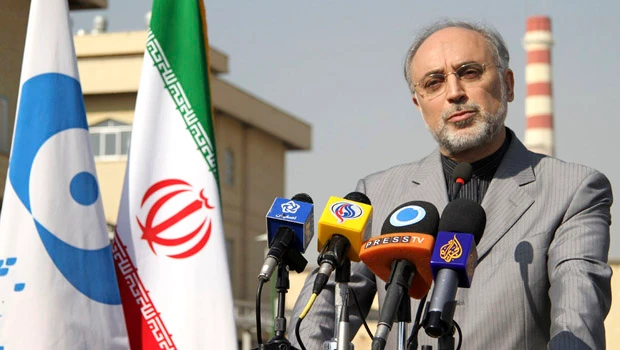
Nuclear energy chief Ali Akbar Salehi said Iran would use domestically produced uranium concentrates, known as yellowcake, for the first time at a key nuclear facility, cutting its reliance on imports of the key ingredient for nuclear fuel.
“This means that Iran has become self-sufficient in the entire fuel cycle,” Salehi said.
Western analysts say Iran sometimes exaggerates its nuclear advances to gain leverage in its stand-off with the West.
The announcement appeared timed to show Iran will not back down in a long-running row over its nuclear program ahead of the Dec. 6-7 meeting in Geneva where six powers are seeking assurances its atomic ambitions are peaceful.
Salehi told a televised news conference that the announcement meant “we will be taking part in the negotiations with strength and power.” He insisted the Geneva talks were for the benefit of the other countries, not Iran.
“These talks are a way out of a political deadlock for the other side. We want to create a graceful solution out of the political deadlock for those who have pressurised us.”
Iran says its nuclear program is aimed at power generation while the West suspects Tehran wants it to yield atom bombs, and has tightened sanctions on the Islamic state in recent months.
Western diplomats say the sanctions are hurting Iran’s oil-dependent economy despite the Tehran leadership’s denials of any such impact, and they hope this will persuade them to enter serious negotiations about its nuclear program.
Western powers want Iran to suspend uranium enrichment activity, which can produce fuel for nuclear power reactors or provide material for bombs if refined to a higher degree. President Mahmoud Ahmadinejad has said Iran’s enrichment will not be discussed in Geneva, though it is the central concern of the six powers — the United States, Russia, China, France, Britain and Germany — that will be present.
Asked upon his arrival in Geneva whether he was optimistic about the talks, Iranian nuclear negotiator Saeed Jalili said: “Everything depends on the other party’s attitude.” “Is there any need to do that?” said another Iranian official, who declined to be named, when asked whether Iran’s enrichment activities would be discussed at the meeting.
Asked whether the yellowcake announcement showed Iran would press ahead with its activities, he said: “Of course.”
Analysts expect no breakthrough in Geneva, the first such meeting in over a year. At most, they believe, the gathering will recreate a climate conducive to negotiations and lead to more meetings that would tackle substantive issues.
Last week’s killing of an Iranian nuclear scientist in Tehran, which Iran has blamed on Western intelligence services keen to impede its nuclear advances, could cloud the atmosphere for dialogue in the Swiss city.
“Once again I am telling the ill-wishers and international criminals ... that we are here and we are resisting and will continue our resistance,” Salehi said. “No matter how much effort they put into their sanctions and in creating all sorts of hindrances, our nuclear activities will proceed.”
Sunday’s announcement that Iran would use yellowcake, a uranium concentrate powder, processed in the country, at its Isfahan conversion plant was the first step in becoming entirely self-sufficient in nuclear fuel production, Salehi said, as progress was also being made developing domestic uranium mines.
“Over the next five years we hope we can reach a point when Iran can meet all nuclear fuel needs inside the country.”
The country has previously used yellowcake bought from South Africa in the 1970s, but some Western analysts have said Iran may be close to exhausting its supply of this material.
The enriched uranium required for use in nuclear reactors or weapons is produced in centrifuges that spin uranium hexafluoride gas UF6 at high speeds. The UF6 is derived from yellowcake, a concentrate processed from mined uranium ore.
In its latest report on Iran’s nuclear program last month, the UN nuclear watchdog said no uranium hexafluoride gas had been produced at the Isfahan facility since August 2009.
Meir Javedanfar, an Iran analyst based in Israel, said: “It is very likely Iran is running out of its supplies of yellowcake and raw uranium, which is why it’s turning to local mines.
“This is also likely to be an Iranian tactic to improve its negotiation position at the upcoming talks, by sending the message that its dependence on the outside world for its nuclear needs are diminishing,” Javedanfar said.