
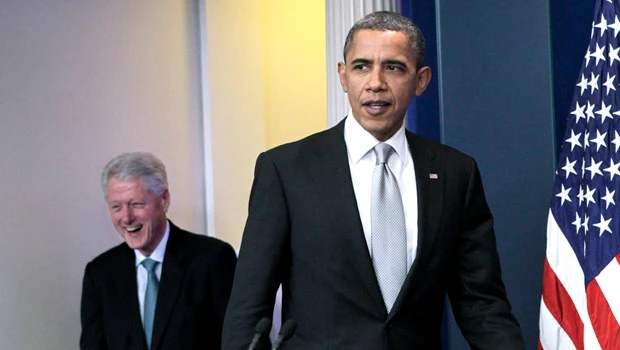
- WASHINGTON: President Barack Obama says the tax-cut deal he negotiated with Republicans is a “good deal for the American people” and he’s calling on Congress to pass it before the end of the year to keep tax rates from rising for most Americans in 2011.
The deal would extend for all earners cuts in income tax rates that are set to expire next month. It also would renew jobless benefits for the long-term unemployed and trim Social Security taxes for one year.
The compromise is the first major test of how the Obama administration will deal with newly empowered Republicans who scored big gains in last month’s Congressional elections.
Republicans support the tax plan because it would not impose higher taxes on the wealthiest Americans, as Obama long had wanted to do. Democrats object to the pact on grounds that it is too generous to the rich.
In his weekly radio and Internet address Saturday, Obama acknowledged that passage of the deal means both parties will have to accept some things they don’t like. But he said the agreement will help the middle-class families that he and others have argued should be spared further economic hardship.
“The opportunity for families to send their kids to college hinges on this debate,” Obama said Saturday. “The ability of parents to put food on the table while looking for a job depends on this debate. And our recovery will be strengthened or weakened based on the choice that now rests with Congress.” “So I strongly urge members of both parties to pass this plan. And I’m confident that they will do the right thing,” he said.
Lawmakers were expected to begin voting on it next week.
Obama won some high-profile backing for the agreement from former President Bill Clinton. The former president told reporters after an Oval Office meeting with Obama on Friday afternoon that “I don’t believe there is a better deal out there.” In their weekly address, Republican Rep.-elect Kristi Noem of South Dakota applauded the deal and said it’s good for small businesses.
“With unemployment still rising, the number one thing our family-owned small businesses need right now is certainty,” she said. “They need to know that the government is not going to come in and do anything to jeopardize their ability to keep their doors open. So it’s certainly encouraging to see that President Obama has proposed a potential agreement to stop all the tax hikes scheduled to take effect on Jan. 1.” But she said additional steps will be needed to spur economic growth, including cutting spending, making government smaller and repealing the new health care law.
While Republicans sat back quietly, mostly pleased, Democrats and other liberals were going at each other ever so publicly. As Clinton lectured on Obama’s behalf, Vermont independent Sen. Bernie Sanders castigated the agreement for the TV cameras Friday in the mostly empty Senate chamber.
Sanders spoke vigorously for 8 1/2 hours, urging defeat of a measure he said would give “tax breaks to millionaires and billionaires who don’t need it.” He finally ended his speech Friday night, conceding “It has been a long day.” In an effort to win votes, particularly from reluctant Democrats, the tax-cut deal has been loaded with gifts for lobbyists and lawmakers. The deal, reached behind the scenes and still informal, now includes ethanol subsidies for farm communities, commuter tax breaks for urban and suburban residents, and wind and solar grants for environmentalists.
It is all expected to come to a decisive vote next week, with the total cost by the latest congressional estimate: $857.8 billion.
But while the add-ons may have won more votes for the Obama-Republican deal in the Senate, their potential impact is less clear in the House of Representatives, where Democrats have criticized the package as a tax giveaway to the rich.
And there’s the possibility the added goodies will have opposite the intended effect for some lawmakers. Republican Rep. Jeff Flake, said the add-ons could turn his fiscally conservative colleagues against the bill.
“You don’t want to be accused out there of supporting stimulus three,” he said. “It will knock some votes off in the House, but more than anything it will show the voters out there that things haven’t changed with Republicans.”

