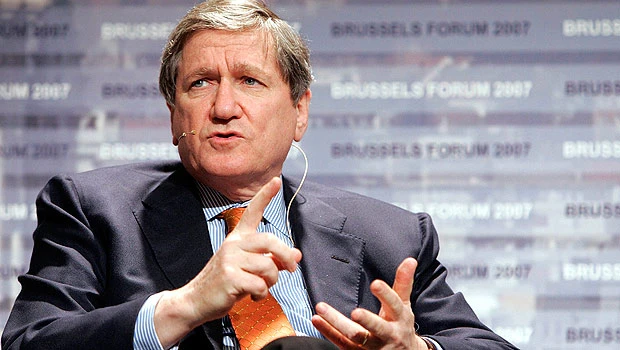
- WASHINGTON: Veteran diplomat Richard Holbrooke, who is a US special envoy on the Afghanistan war, was in critical condition after more than 20 hours of surgery to fix a tear in the large artery that moves blood from the heart.
President Barack Obama said in a statement that he and first lady Michelle Obama were praying for Holbrooke’s recovery. He called Holbrooke, “a towering figure in American foreign policy” who has been a critical player in developing the administration’s policy on Afghanistan.
The 69-year-old Holbrooke was meeting with Secretary of State Hillary Rodham Clinton about midmorning Friday at the State Department when he collapsed.
“Anyone who knows him, and I was with him Friday morning before this happened, knows how tough and resilient he is and we’re all praying that that quality sees him through now,” Obama adviser David Axelrod told CNN’s “State of the Union” on Sunday.
Doctors at George Washington University Hospital worked more than 20 hours through the day Friday and overnight to repair the tear in Holbrooke’s aorta. The surgery was completed Saturday morning, said State Department spokesman P.J. Crowley.
Holbrooke’s family was said to be with him. Clinton and Adm. Mike Mullen, chairman of the Joint Chiefs of Staff, have been at the hospital as well, according to the White House. Clinton visited on Friday night and again on Saturday.
“Richard Holbrooke is a towering figure in American foreign policy, a critical member of my Afghanistan and Pakistan team, and a tireless public servant who has won the admiration of the American people and people around the world,” Obama said in a statement.
Hospital officials referred all questions about Holbrooke’s condition to the State Department.
A torn aorta is a condition in which a rip develops in the inner wall of the aorta allowing blood to enter the vessel wall and weaken it. If not corrected the condition can lead to rapid death. As blood enters the wall it reduces blood flow just as if there were a severely bleeding wound, leading to serious internal bleeding, a loss of blood flow and possible complications in organs affected by the lack of blood, according to medical experts.
Even if the surgery has stabilized Holbrooke’s condition, recovery is likely to be lengthy.
Holbrooke’s illness comes just days before the Obama administration is expected to roll out the results of its review of the Afghanistan war next Thursday. His illness is unlikely to result in any changes in that review in which the diplomat has played an integral role.
Afghan President Hamid Karzai sent a letter to Holbrooke, saying he was saddened to hear the diplomat had gone through surgery and wished him a quick recovery, according to a statement from Karzai’s office.
“But when I was informed that your health condition was better after the surgery, I was very happy,” Karzai said in the letter.
Holbrooke’s prolonged absence could have an impact on the administration’s ability to implement — and also sell to a skeptical Congress — its push for Afghan forces to assume a greater role in the fighting, allowing US troops to come home. It is a transition in which Holbrooke was expected to play an important part, since he has made many visits to the region and developed personal relationships with leaders in both Afghanistan and Pakistan.
The feisty and sometimes abrasive diplomat — whose forceful style earned him nicknames such as “The Bulldozer” or “Raging Bull — is perhaps best known for helping broker the 1995 agreement that ended the war in Bosnia.
He served as ambassador to the United Nations during the Clinton administration. He also was ambassador to Germany from 1993 to 1994 and then assistant secretary of state for European affairs.
Holbrooke’s career with the foreign service dates back to his posting in South Vietnam in 1962 and included time as a member of the US delegation to the Paris Peace Talks on Vietnam.