
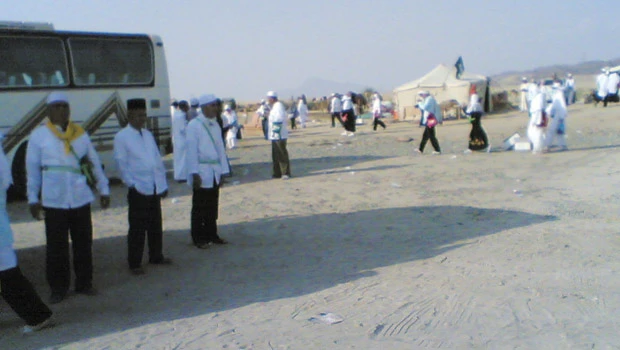
- JEDDAH: Many pilgrims who come for their spiritual journeys stay for a little while longer to take in the sights and sounds of the western region of the Kingdom.
- Many of them take the old Makkah–Jeddah Road instead of the Haramain Expressway.
Recently Arab News encountered a large group of Southeast Asian pilgrims at one of the lots to learn how they came to know about camel milk.
Sufian Lutfi, an Indonesian pilgrim group leader, said he comes to this location to drink camel milk every time he comes to the Kingdom. “I drink it because I believe it gives strength to body. I learned about it from my friends and reading books. It turns old men young,” he said with a smile.
Housewife Marhama Rashidi agreed. “I like it because it really gives me strength and makes me feel good,” she said.
“The group asked me to bring them here to drink camel milk,” said Banban Solistio, a bus driver from Indonesia. “Some of them think that they are following the Prophet (pbuh) as it is narrated that he used to drink it, while others do it thinking that it gives strength to body. Also, some do it for curiosity, especially since we don’t have camels back in our country.”
Salim, a Saudi employee at a pilgrimage services office, said he comes here from time to time to drink camel milk.
“It is fresh here, unlike on grocery stores shelves,” he said.
Pasteurized camel milk, though not as common as cow’s milk, is available in Saudi grocery stores nationwide.
Hassan, working also at a pilgrim services office, said that he drinks the milk because he believes it makes the body stronger.
“I have known this from my teachers and reading the books on the history of early Muslims, especially at the time of the Prophet,” he said.
Ahmad, a Sudanese camel-milk vendor, said he has noticed an increasing number of pilgrims, especially from Indonesia, coming to try camel milk.
Camel milk seems to be gaining more ground abroad. Last year some press reports said that European Union food and drug authorities had approved the exports of this kind of milk from United Arab Emirates to the countries of the union starting in 2011.
A dairy industry source in the Kingdom said that the production of this kind of milk is almost enough to cover the local market need, but the idea of exporting it to Muslim countries, especially those in Southeast Asia and Turkey looks worthy for consideration if production can be raised beyond the local needs.