- LONDON: Dr.
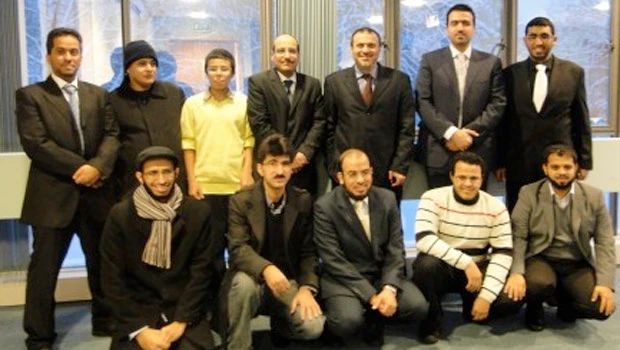
- Ziad Al-Drees, permanent delegate of Saudi Arabia to the United Nations Educational, Scientific and Cultural Organization (UNESCO), gave a talk about his experiences to members of the Saudi Journalists Club UK (SJCUK) at Brunel University in London on Saturday.
Al-Drees, who came from Paris where he resides, spoke about his passion in writing and his three books, and announced that he is to soon launch a new book in Arabic titled “Tell Me Who Am I, I Tell You Who You Are.” He also explained how new positions sometimes force you to think twice before publishing anything under your name. “ I made it clear to myself this year my writings come first, because this is what I love doing. Yet I will not hesitate to give my best to my work and family too,” he said.
“Getting a position at UNESCO is a golden wish for anyone,” Al-Drees told the audience, which included journalists and the counselor at the Royal Embassy of Saudi Arabia, Abdulrahman Al-Anezi, and others who, despite the unexpected snowy weather conditions, came from different UK cities to see him.
“Many people until now do not know or differentiate between UNESCO and the United Nations Children's Fund (UNICEF), perhaps because the later deals with children abuse which concerns the majority,” he said.
Speaking about the people of Saudi Arabia, he said, “We have to be thankful and admit we still owe it to the late Ghazi Al-Ghosaibi, Saudi Arabia’s former minister of labor. When he was nominated to become the next director-general there in 1999, our country started to learn about UNESCO and its activities and goals.”
Despite Saudi Arabia being one of the 20 founding countries that inaugurated UNESCO, the Kingdom’s role has not been as positive as expected, he said. Hence during the past years, since Al-Drees’s appointment in 2006, he has made sure the Kingdom’s culture gets its fare share of promotion abroad.
After Sept. 11, he said, people started to generalize and had lots of misconceptions about Saudi society, something he has tried to correct as much as possible. “The thing is, the best way to talk to them is through the language they speak, and sometimes maybe via their own people.” For example, someone who visited the country and wrote about it, he added.
“It is not right just to go and give them lectures about who we are, they need figures. When we say for example 64 percent of our students are females, and that these females are becoming more distinguished than men, this shocks them and at the same time indicates that the picture is not as bad as they thought. This is the case even if these educated women later on did not get the jobs they dreamed of and faced discrimination at work. But that’s everywhere,” he said.
In addition to that, he said, now every year a group from UNESCO visits Saudi Arabia and introduced to its culture and heritage on special occasions such as National Day, Janadriya Festival and the annual Riyadh book fair.
In 2008, Al-Hijr Archaeological Site (Madain Salih) was recognized as a world natural heritage. This was followed by At-Turaif District in Al-Dir'iyah, north west of Riyadh, in 2010. The next target is, he said, “giving the same recognition to old Jeddah (Al-Balad).”
Al-Drees said that although the Palestinian cause is still a priority at UNESCO, it can only be tackled from a cultural point of view. He added that though recommendations are suggested, they all fail “because politics still has to be part of it.”