
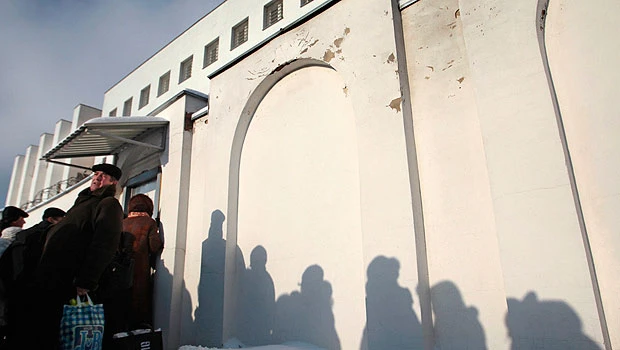
- MINSK: Belarus jailed more than 600 opposition activists on Tuesday, ignoring Western criticism of a police crackdown on protesters following the re-election of President Alexander Lukashenko.
The activists were imprisoned for between five and 15 days, the Interior Ministry said. Their leaders, including at least five candidates in the election, face up to 15 years on charges of stoking violence on Sunday in the snow-bound capital Minsk.
Re-elected by nearly 80 percent of the vote to a fourth term in office, Lukashenko on Monday vowed to thwart any attempt at “revolution” in the ex-Soviet republic and said there would be no more “senseless democracy” in Belarus.
His uncompromising tone suggested little immediate future for warmer relations with the European Union, which has been weighing how far to engage with the country of 10 million people on its eastern flank and possibly provide financial aid.
Russia underpins the command economy with energy subsidies, but relations with Lukashenko have become strained.
The opposition said on Tuesday it would launch a “campaign of solidarity” with those being held by police, starting with a picket at the jail later in the day.
“The dictatorship has united the opposition,” said Vyacheslav Sivchik, leader of the opposition “Together” movement.
The United Nations High Commissioner for Human Rights, Navi Pillay, on Tuesday echoed US and European criticism of the crackdown, expressing concern over “violence against, and abduction of, opposition candidates and their supporters.”
Pillay also condemned the detention of human rights activists and “harassment” of independent non-governmental organizations.
Monitors of the Organization for Security and Cooperation in Europe (OSCE) criticized the poll as flawed and condemned the police crackdown on some 10,000 protesters who marched down Minsk’s broad avenue to protest alleged vote-rigging.
Lukashenko has ruled the country, which forms a buffer between Russia and NATO, with an iron fist since 1994, jailing opponents and muzzling independent media.
Russian energy subsidies underpin the Belarussian command economy, but Moscow has been losing patience with its unpredictable ally.
Lukashenko has been flirting with the European Union in recent years, and Brussels had dangled the prospect of financial aid if the election demonstrated at least a veneer of democracy.

