
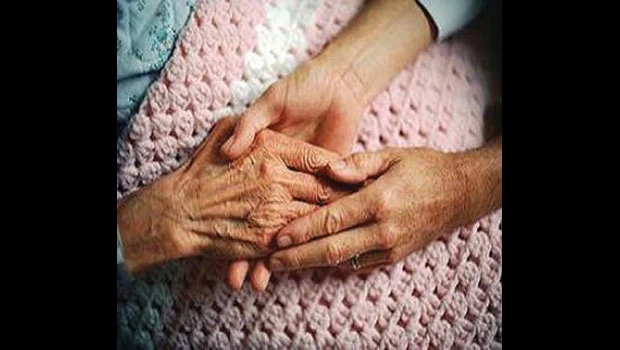
- AL-AHSA: Medical experts in Saudi Arabia debated whether it is still permissible to terminate the life of a person who is clinically dead or not.
It appears that the issue remains a contentious one, especially after the Third International Conference on Advanced Cardiac Sciences (The King of Organs, 2010), held in the eastern city of Al-Ahsa recently.
The three-day event, organized by the Prince Sultan Cardiac Center in Al-Ahsa, was attended by a galaxy of well-known scientists, surgeons and experts in advanced cardiac sciences from across the world.
Even though most experts agree on the scientific fact that there is only a slight chance for a clinically dead person to recover, they are of the firm view that there is no reason to take a brain-dead person off a ventilator as long as his or her heart is beating.
They point out that only God, who blows life into the womb when the fetus is four months old, knows when to take it back. This viewpoint is contrary to the position taken by the highest Saudi religious body as well as other experts in the field.
According to a religious edict (fatwa) issued in the Kingdom 22 years ago and which is still the guiding principle for cases of terminally ill patients, a person who is in coma and is declared as clinically dead or brain dead should be disconnected from the ventilator.
This essentially means that the patient's beating heart should be allowed to die. The fatwa, approved by the Kingdom’s top religious authority, was based mostly on the advice of the medical community.
Commenting on the topic, a leading Saudi expert in cardiac sciences and Director of the Prince Sultan Cardiac Center Dr. Abdullah A. Abdulgader has called on the Kingdom’s Islamic scholars to revise their ruling on terminating the life of a brain dead person.
Reemphasizing his viewpoint that a beating heart is the sign of life, he said that terminating the life of a brain dead person is wrong both scientifically and medically. “The heart is where life is. As long as the heart is functioning, a person should be considered as alive. When it stops working, the person dies as his soul departs,” he said. “The will of God regarding the termination of one’s life goes beyond all health debates. Allah can restore life to other parts of body even after one’s clinical death. Therefore, it is not permissible to deny a brain dead patient his right to live until the time of his death. Taking such a person off the ventilator is allowing him or her to die.”
Abdulgader, the main organizer of the event, said one of the conference’s major recommendations focuses on this controversial issue. “The presence of a biological tissue mass, most commonly a mass of nerve cell bodies called ganglia inside the heart, has been confirmed. Through this tissue mass, the heart can control other systems in the body,” he said. Regarding the relationship between heart and brain, Abdulgader said: “Advanced research shows that there is a nerve system flowing from heart to brain and another one from brain to heart. The flow of the former is superior to the latter,” he said. Reacting to those who argue for taking a brain dead person off the ventilator, the prominent Saudi cardiac researcher cited some scientific facts.
He claimed allowing a clinically dead man to die is virtually denying terminally ill patients the advantages of the great medical revolution that has been taking place since the first heart transplant was conducted in 1967. He also noted the scientific endeavors and research being conducted on how to return a brain dead person to a normal life.
According to Abdulgader, the ongoing research of all these experts point to the fact that the heart, not the brain, is the main organ. “Our eminent doctors, scientists and researchers are unanimous in their findings along with elite scientists across the world on this matter,” he said.
“We are living in a country based on Shariah. Hence, it is our duty to pass on new scientific findings on this topic to our respectable scholars.”
The researcher also noted that a number of elite scientists who have conducted revolutionary research in the field attended Al-Ahsa conference and emphasized the role of heart as the main organ.
Dr. Qais Al-Mubarak, member of the Senior Scholar’s Commission, said that death happens when the soul leaves the body of a person. “Hence, clinical death is not actual death. But it is a condition that warns of impending death. It does not mean that a brain dead man would return to normal life,” he said.
“However, the person should not be treated as a dead one. It is not permissible for doctors to take any of his organs off to transplant in other patients.”
He added that taking a clinically dead person off ventilator is not killing him. “It is simply putting him in a situation that allows him to either live or die.”
Dr. Talal Taha, director general of forensic medicine in the Kingdom, is of the view that a clinically dead person should not be taken off the ventilator.
“As long as a patient's heart is beating, he or she should be considered as living. Everything is permissible in his case as a patient. In the West, a brain dead person is not taken off the ventilator under any circumstances,” he said.
“Sometimes, providing certain treatments like chemotherapy may be stopped. But removing him from a life support system is only with the consent of the patient’s relatives. For this, sometimes a court order is needed. Even judges do not issue a rule to take a patient off the ventilator if his heart functions. That means the patient is under the mercy of God for as long as his heart is functioning.”
Taha cited the example of a man who had been in coma for about 16 years after falling down from a ladder and receiving head injuries. The patient was given liquid through tubes. He lived only because of a functioning heart, he said while noting that turning off a clinically dead patient’s ventilator is a punishable offence in some Western countries. “The doctor and other medical staff will be charged with murder,” he said.
Dr. Hani Najm, chairman of the Saudi Cardiology Society and head of the cardio surgical division at King Abdulaziz Center, holds the same view. He noted that it is impossible for a terminally ill person to live without life support.
Referring to the fatwa allowing patients to be taken off the ventilator, he said that there have been no cases of any patients anywhere in the world returning to normal after being declared clinically dead. Najm said that both the religious and scientific elements of the issue should be taken into account. The Shariah aspect should be referred to learned jurisprudents and muftis, and the scientific aspect to concerned experts in the field, he added.