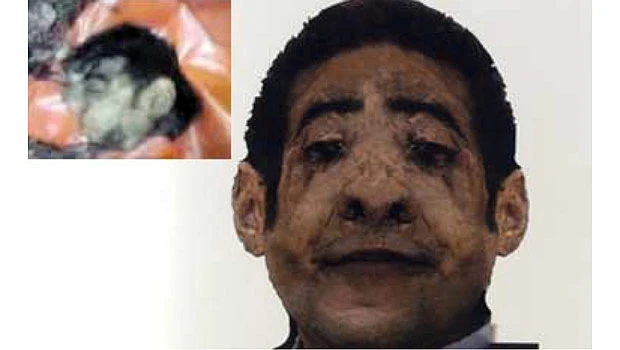
- CAIRO: Egyptian police have released a sketch of the likely bomber at the Alexandria church on New Year’s that killed 23 people and injured dozens more.
He is believed to be between 23 and 25 years of age and the authorities hope to identify the person with the help of data available at the Civil Status Department. They also estimated that between 20 kg and 25 kg of TNT was used in the blast.
The investigators have also pieced together a bag resembling a school or travel bag belonging to the bomber.
The criminal lab tests have also shown that the bomb might have detonated prematurely or by error. The bomb contained steel parts for shrapnel, the reason why most of the victims’ bodies were badly disfigured.
Investigators have also gathered 118 fingerprints of the victims and are comparing them with the samples of known terrorists.
A chemical engineer Islam Mabrouk, the owner of the green Skoda car that was initially suspected to have been linked to the explosion, has been arrested from a hospital where he has been undergoing treatment for injuries.
Meanwhile, Egyptian authorities put up a heavy security cordon early Thursday around the main Coptic cathedral in Cairo hours before Christmas Eve Mass, using bomb-sniffing dogs, metal detectors and officers to try to prevent another attack like the New Year’s suicide bombing
Al-Qaeda in Iraq had threatened Christians in Iraq and Egypt in the weeks leading up to the holidays, and militant websites have even posted online lists of churches in Egypt to target with their addresses.
Egypt’s Coptic Christian minority, which makes up 10 percent of Egypt’s 80 million people, celebrates Christmas on Jan. 7. Some Christians have said they will skip Christmas Eve services for fear that there will be more attacks.
Across the country, police were preventing vehicles from parking near churches. They also planned to check identity cards of those entering churches and ban people from bringing in bags and purses. Outside the Coptic cathedral in downtown Cairo, security officers with walky-talkies fanned out across the surrounding streets to keep an eye out for suspicious activity.
In the southern province of Minya, a worker at a church found a small explosive device packed with nails and fireworks planted under the building’s stairs, a security official said, speaking on condition of anonymity because he was not authorized to brief the media.
He said the device appeared to have been put there to “test security measures.”
Several daily newspapers reported that Egypt’s Interior Ministry has asked church officials to prevent crowds from gathering in front of churches.
The request appeared aimed at avoiding the same sort of target hit in the Jan. 1 bombing in Alexandria — worshippers lingering outside of a church after a midnight service.
On Wednesday, the ministry published a picture of an unidentified man whose head was found at the site of the Alexandria attack. A security official said that church officials could not identify the man, and presumed that he might be the attacker.
The bombing of the Alexandria church, the worst act of sectarian violence in Egypt in a decade, touched off days of demonstrations and riots by the Christians blaming the government for encouraging discrimination and prejudice and not doing enough to protect them.
In a gesture of solidarity with the country’s Coptic Christian minority, Egyptian activists have called on Muslims to form human shields in front of the churches on Christmas Eve.
— With input from agencies