
- Last week in CompuNet we advised our readers that many more tablet computing devices would be introduced this year.
- In reality, an avalanche of new tablets is on the way.
According to a new report from Yankee Group Research on Tablet/E-Reader Market Trends, the total global revenue for tablets is expected to reach $46 billion in 2014. While revenue from tablets will be way up, the average selling price of tablets worldwide will fall by more than half between 2010 and 2014. Last year, North America led in tablet revenue with 37 percent of the global market, but by 2014, North America’s share will be down to just 17 percent as sales in Asia-Pacific heat up. Expect to see a lot of vendors creating tablets targeting India and China. What are the new tablets offering? There’s a cornucopia of diverse features.
MSI has two WindPad tablets — one on the Windows platform and the other running Android. Both tablets are 10.1 inches with multi-touch controls and have functions from G-Sensor gravity detection to ALS light sensors. But the devices aren’t slick enough and initial impressions of the tablets are that these are budget computing devices being sold at the $499 premium price.
ASUS fared better in the reviews. It has released several new tablet computers but the most impressive is the Eee Slate EP121. Running MS Windows 7 home premium powered by an Intel Core i5 processor, the EP121 is more powerful than most other tablets. It has a 12-inch high-res touch screen, weighs 1.16kg, comes with either a 32 or 64 GB SanDisk P4 modular solid state drive (pSSD) and offers 10 hours of battery life.
If 12 inches is just too much, then Toshiba’s Android 3.0 Honeycomb-powered tablet should be considered. Featuring a 10-inch HD display, the Toshiba Tablet offers a lot more than the current iPad, including a camera, a memory-card slot and support for Flash video. The tablet’s design features Toshiba’s EasyGrip finish, a slip-resistant rubberized surface that is easy to hold. Users can change the EasyGrip back covers to change the color scheme of the tablet. The prismatic lithium ion battery is replaceable too. The tablet, as yet unnamed, won’t be available till later in the first half of 2011.
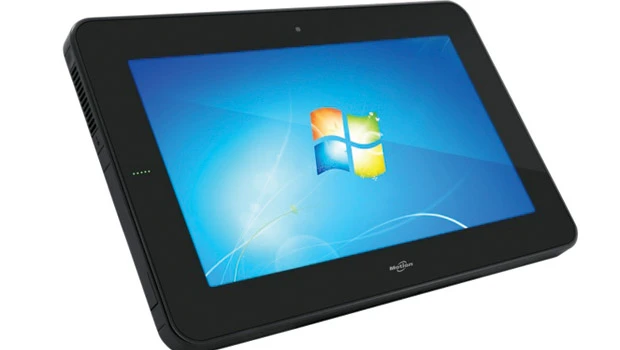
It can be confusing to decide which tablet is best. The easiest thing to do is to separate the devices into business or consumer computing platforms and then narrow down the selection. Business tablets are focused on power and functionality. For instance, the Motion CL900 is a robust tablet that runs on Windows. It’s a business-ready tablet device that aims to improve worker productivity, while meeting corporate security and compliance needs. It’s great for business, but not so nice for a fashionable lifestyle. Enspert’s Identity series are some of the nicest looking tablets. These tablets are entertainment devices that maximize features for sharing multimedia content. They’re not intended for the content creation requirements of a business environment.
Then, of course, there are the tablets designed for niche usage. The most interesting one of these is the Korean OCOSMOS OCS9 Tablet. Powered by Intel’s Oak Trail Atom platform with a Windows 7 operating system, the OCS9 is capable of running the most demanding online PC games, MMORPG, 3D and social networking applications. The OSC9 offers a 9-inch 1024 x 768 multitouch capacitive touchscreen, detachable QWERTY controller with virtual keyboard and a companion pouch with space for a spare battery. The OCS9 has front and rear cameras, a microphone for video chat, 64GB of Internal SSD storage and it can handle up to 64GB of micro SD storage. The OCS9 won’t be released until the second half of this year and no price is yet available, but it’s clear that the iPad definitely has some new competition.