- JEDDAH: Intense rain on Wednesday triggered heavy flooding once again in Jeddah, causing traffic jams and power outages across the city and even sparking fires, including one at the popular Hera Mall.
Civil Defense teams managed to put out the mall fire and no deaths or injuries. The cause of the fire is still under investigation.
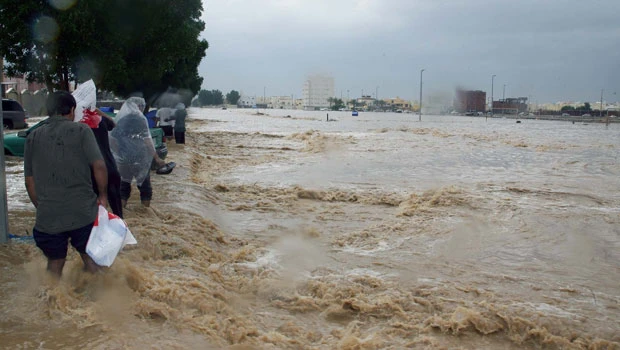
Power outages struck wide areas and cars were seen floating in many low-lying places. In one neighborhood, flash floods swept away a car, which then got stuck into a large open flood drain, causing water levels in the district to further rise.
Among the major thoroughfares that came under heavy flooding was Madinah Road, which leads to the airport. A massive traffic jam could be seen until the afternoon as rains continued.
Officials at the Jeddah Traffic Department said vehicles on the Haramain Expressway also came to a standstill as a result of huge flooding close to Palestine Street. There were also reports that traffic had stopped along King Abdul Aziz Road because of flooding. To avoid traffic jams, motorists were using minor roads in residential districts.
Concerned citizens reported a total absence of traffic police in streets and motorists were running red lights and driving in the wrong direction over pavements and central reservations. People also reported accidents on roads, adding that the situation was a total chaos.
The situation in districts located toward the east of the city, which were struck by deadly flash floods in 2009, was uncertain.
Residents of the Um Al-Khair and Al-Ajwad 1 and 2 districts reported heavy flooding. Seeing dark clouds and fearing heavy rain, many residents of the city’s Quwaizah district, which took the brunt of the flash floods that hit the city on Nov. 25, 2009, left their homes to live with friends and relatives in other parts of the city early Wednesday morning.
Many people had horrific experiences today. “I had a horror story in Jeddah’s rainstorm … I had a four-hour walk from Palestine Street to Malik Road just to get home. My driver and I had to park our car on Palestine Street because we couldn’t go further as streets transformed into rivers with fast currents,” said Ahmed Fawzy Mosly, a medical intern at KAU.
“I experienced it all firsthand and it was so surreal. You know those flood movies that exaggerate the coming of the apocalypse? It felt exactly like that. I walked waist-deep in some streets, carefully avoiding obstacles and potholes,” he said.
“People were either too scared to continue walking or desperately looked for safety (dry land), whether it was under a roof, getting home, or even standing on top of their cars. We stuck together when the streets were too deep, holding each other’s hands and treading lightly,” he said.
“As strangers passed by, they asked where I was coming from and how bad were the streets, as if I was a pilgrim traveling from a great distance. You wouldn’t believe the amount of people taking pictures and filming in awe. As hopes shattered, I found a shed of light as I walked through a small district,” he said.
Mosly said he saw a group of children and adults playing ball and having fun, as if the ankle-deep streams beneath them didn’t exist. “At the end of it all, I thank God for arriving safely. At least I had the best workout in years,” he said.