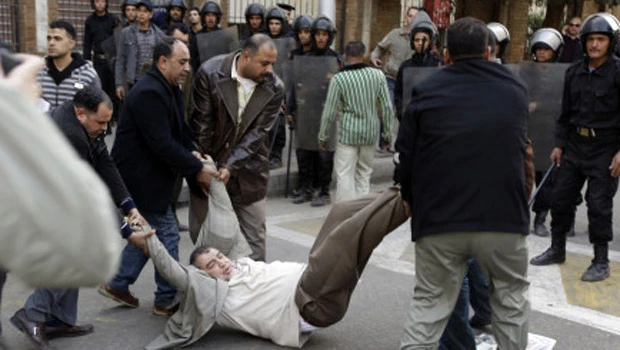
- CAIRO: Egyptian anti-government activists tried to stage a second day of protests around Cairo Wednesday in defiance of an official ban on any gatherings, but police quickly moved in and used tear gas and beatings to disperse the demonstrators.
A day after tens of thousands turned out in several cities for the biggest anti-government protests in years, activists used social networking sites to call for fresh demonstrations. But Facebook, a key tool used to organize protests, appeared to be at least partially blocked in the afternoon.
The Interior Ministry warned police would not tolerate any gatherings, and there was a heavy security presence on the streets, poised to crack down quickly on any new signs of unrest.
Police fired tear gas to disperse a crowd of several hundred activists on a main commercial thoroughfare in central Cairo, chasing them through side streets as both sides pelted each other with rocks with hundreds of onlookers watching anxiously.
Earlier, dozens gathered outside the Journalists' Union in downtown Cairo and renewed the chants heard against President Hosni Mubarak throughout Tuesday's much larger protests.
Many protesters say they have been inspired by the uprising in Tunisia — even invoking some of the identical slogans heard in the other North African nation.
Egypt's benchmark stock index fell to its lowest point in eight months, tumbling more than 6 percent as investors fled the market. The Egyptian Exchange's benchmark EGX30 index closed down 6.14 percent to 6,310.44 points — just shy of its previous record drop of 6.2 percent in May, according to traders.
The White House called on Egypt's government to be "responsive" to its people's aspirations. "The Egyptian government has an important opportunity to be responsive to the aspirations of the Egyptian people, and pursue political, economic and social reforms that can improve their lives and help Egypt prosper," said a statement issued late Tuesday.
"We support the universal rights of the Egyptian people, including the rights to freedom of expression, association and assembly," the statement added.