- TUNIS: Tunisia issued an international arrest warrant for ousted President Zine El-Abidine Ben Ali on Wednesday, accusing him of taking money out of the North African nation illegally.
Ben Ali, who fled the country after being driven from power this month by violent protests, was also being charged with illegally acquiring real estate and other assets abroad, Justice Minister Lazhar Karoui Chebbi said.
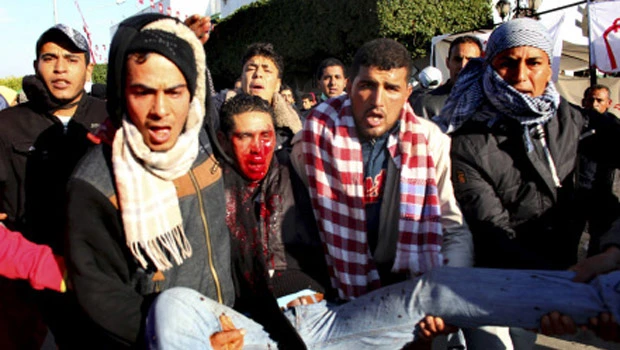
Chebbi spoke to reporters as Tunisian police fired tear gas at hundreds of protesters who have been pressuring the interim government to get rid of old guard ministers who served under Ben Ali. The clashes broke out in front of the prime minister's office in Tunis. Acrid clouds of tear gas engulfed hundreds of people, and some demonstrators responded by throwing stones at police.
At the press conference, Chebbi said Tunisia has requested help from Interpol in its efforts to bring Ben Ali to justice. Interpol declined immediate comment.
Tunisia is also seeking the arrest of Ben Ali's wife, Leila, as well as other family members. French media have reported that Leila left the country with gold bullion.
Tunisia's new central bank governor, Mustapha Kamel Nabli, has denied that any gold was taken from the bank's vaults during the final days of Ben Ali's regime.
Ben Ali, his wife and their clan have been widely accused of abusing their power to enrich themselves. In France, where family members are believed to have assets ranging from apartments to racehorses, the Paris prosecutors' office has opened a preliminary investigation into their holdings.
The justice minister released figures Wednesday that highlighted the massive scope of the current unrest. Some 11,029 prisoners — about a third of the country's prison population — were able to escape amid the chaos, he said.
Of those, 1,532 prisoners have returned behind bars, he said. Another 74 prisoners died in fires that broke out at several prisons.
Tunisia's ambassador to Japan, Noureddine Hached, said Wednesday he had resigned from his post in solidarity with the revolution under way in his home country. Hached, whose father was assassinated in 1952 as leader of a Tunisian workers' union that sought national independence, said he planned to return to Tunisia by Feb. 15.
The United States, meanwhile, asked Tunisia's government to do more to satisfy the demands of the people and said once again that it was ready to assist the country in preparing for its first free elections.