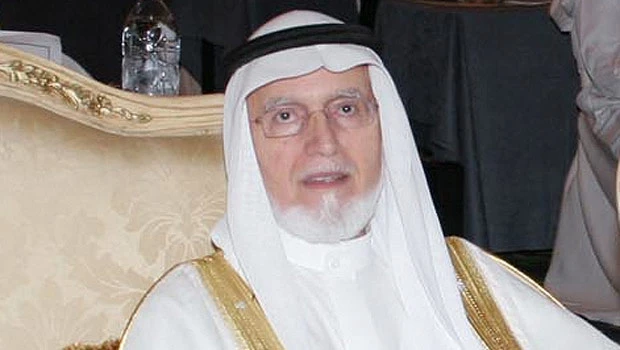
- JEDDAH: Abdullah Omar Naseef, former deputy chairman of the Shoura Council, has urged the government to establish a new state-of-the-art rainwater drainage system for Jeddah to prevent recurrent flooding in the city.
Speaking to Arab News, Naseef said the government should not allow construction in low-lying valleys. “Those who presently live in these valleys should be provided with housing facilities elsewhere,” he added.
“In the past, there were strict orders that no houses should be built in the valleys. But people have forgotten those rules and started giving permission to build houses in low-lying areas. This obstructs the flow of rainwater and causes flooding,” he said.
He said Jeddah was surrounded by canals. “Now we cannot see those canals because of massive development works. At present, the only way to solve flooding is to create a new drainage system solely to clear rainwater,” he explained.
Naseef, who holds a Ph.D. in geology from Leeds University in the UK, expects more rains in Jeddah in coming years. “The global climate change will bring more rains to Saudi Arabia. So we have to take necessary precautions,” he said.
He said he had seen heavy downpour similar to that of Jan. 26 during his childhood. “In those days, our grandfathers had constructed reservoirs in different parts of Jeddah to collect rainwater and prevent flooding. Even in our old house in Jeddah there is a reservoir underneath to collect rainwater. It’s still there,” he said.
Speaking about anti-government protests in some Arab countries, Naseef said this was the result of autocratic rule. “Some leaders have been ruling their countries in accordance with their whims and fancies. People have now joined hands to oppose dictatorships and corrupt forces. I hope this will lead to the revival of Islam in these societies, bringing about greater progress and prosperity.”
He hoped Islamic organizations would play a constructive role in the new governments by changing their ways and removing fear from the minds of people. “I think the change should come from within Islamic groups by changing their attitude and showing greater openness,” he said, citing the AK party of Turkey as a good example for them to follow.
Naseef, who served as secretary-general of the Muslim World League for 10 years, emphasized the need to remove Western fear about Islamic parties coming to power in Muslim states. “We have seen the West opposing Hamas in Palestine and the Muslim Brotherhood in Egypt because of their Islamic roots. We have to convince the West that Islam is not against them,” he said.
A winner of the King Faisal International Prize for Service to Islam, Naseef said Islamic movements should be more pragmatic in their approach.
“Many of our organizations are so rigid in their attitude that they say if you are not with us, you don’t belong to us. We need real change to strengthen unity and confront challenges. We should work together to eradicate poverty and illiteracy from society. We should be more realistic, accommodative and open-minded. Unfortunately, parochialism has spread like a disease in our organizations everywhere,” he said.