
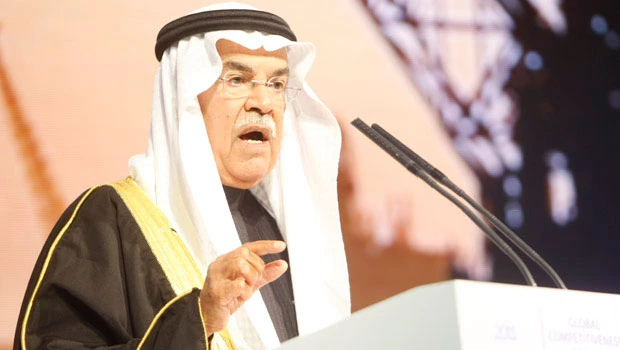
- GENEVA: Minister Of Petroleum and Mineral Resources Ali Al-Naimi said Monday that the Kingdom had "significant" spare capacity to help stabilize oil markets despite the prospect of continued volatility.
"There is adequate spare capacity in the system, inventories in all key markets are ample and there is significant spare capacity in Saudi Arabia," Al-Naimi told a UN forum on commodities in Geneva.
"The Kingdom realizes it has an important role to play in promoting stability in world oil markets," he added, underlining its past efforts in working for a "well supplied and balanced" market.
"It is our ongoing policy to maintain at least 1 to 1.5 million barrels per day spare capacity to use wherever and whenever it be needed. Today it stands at about four million bpd," he said.
Al-Naimi and a senior International Energy Agency official insisted there was little reason that growing demand from Asia, emerging nations and recovering Western economies should outstrip supply and spark a return to record prices seen in 2008.
Meanwhile, leading OPEC officials said the group is concerned by unrest in Egypt but sees no need for an immediate boost in its output as there is no shortage of oil.
Oil prices have spiked due to tensions in Egypt. Brent crude is near $100 per barrel on fears instability could spread through the Middle East, which together with North Africa extracts over a third of the world's oil.
The unrest spurred the oil price rally, which was already gathering pace after a bigger than expected jump in demand due to the global economic recovery. On Monday, Brent traded at $99.40 a barrel, after hitting a 28-month high on Friday, while benchmark US crude futures were up 0.17 percent at $89.47.
OPEC Secretary-General Abdullah Al-Badri told reporters in London OPEC did not think it was necessary to call a meeting before its next planned gathering in June, But he added that the mood was changing due to the situation in Egypt.
"Before the Tunisian and the Egyptian crisis, we don't see it (an extraordinary meeting). But now, I don't know if this crisis will escalate. I hope not," Badri said when asked about chances for an OPEC meeting before June.