
- DAMASCUS: President Bashar Assad said there was no chance the political upheaval shaking Tunisia and Egypt might spread to Syria, which has been controlled by his Baath Party for the last five decades.
In an interview with the Wall Street Journal published on Monday, Bashar said that Syria's ruling hierarchy was “very closely linked to the beliefs of the people” and that there was no mass discontent against the state and no need to change policies.
“This is the core issue. When there is divergence between your policy and the people's beliefs and interests, you will have this vacuum that creates disturbance,” Assad said, adding the priority was stability and a gradual opening of the economy.
“So, security becomes first; how can you stabilize your country, how can you prevent your society from extremists... Second, economy, this is the second urgent priority.”
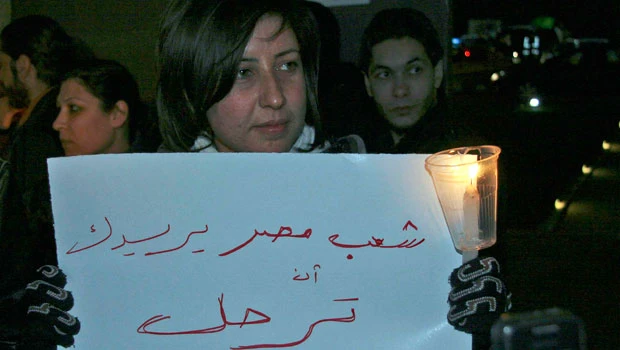
A revolt in Tunisia toppled Zine Al-Abidine Ben Ali three weeks ago and protesters in Egypt held a seventh day of demonstrations to end the 30-year rule of President Hosni Mubarak, whom many believed was grooming his son Gamal to succeed him.
Some political commentators suggest Syria could be subject to the same forces being seen in Egypt. Both countries are ruled through emergency law and suffer an acute gap between rich and poor, widespread corruption and 10 percent unemployment estimated independently at least double that.
Bashar, who succeeded his late father 11 years ago, keeping the old system intact, said that the government had started “to involve the people in decision making” by allowing private universities, opening the banking sector and allowing private media.
“It is better than six years ago, but it is not the optimal situation. We still have a long way to go because it is a process,” he said. “...To be realistic, we have to wait for the next generation to bring this reform.”
Bashar said a draft media law could further relax control on the sector, but he did not say whether Internet bans, including Facebook and scores of news sites, which were intensified in the wake of the Tunisian revolution, would be lifted.
Bashar did not address the issue of thousands of political prisoners in Syria and government controls include travels bans on hundreds of his critics, emergency law and a ban on any opposition that have been in force for 50 years.