
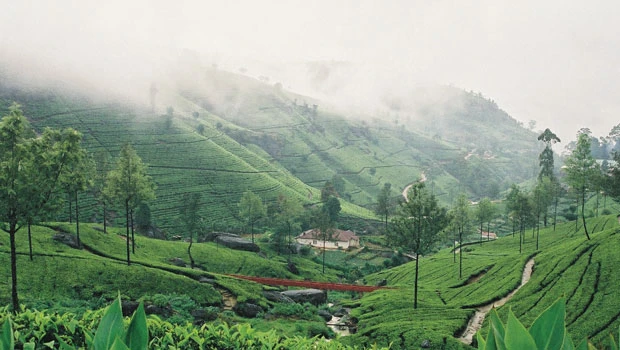
- Sri Lanka is world-renowned for its high quality teas.
Though relatively small in size, it exports most of its tea, making it the world’s second largest exporter of the commodity and ranked the third largest tea producer in the globe.
The island’s annual tea production is around 320 million kg, which accounts for nine percent of the world tea production.
The annual tea export volume of Sri Lanka is more than 315 million kg.
It has a share of 18 percent in the global tea export market.
In other words, the island’s teas have been developed to cater to the tastes of tea drinkers all around globe.
Tea constitutes nearly 45 percent of Sri Lanka’s exports to Saudi Arabia. Last year, some 3.8 million kg was exported to the Kingdom.
Tea cultivation is scientifically managed, which leads to the production of the world’s finest fragrant blends with consistency in flavor, aroma and color.
Tea cultivation was established, in Sri Lanka, over a century ago and is now produced year-round in the central highlands and southern regions of this beautiful tropical island.
In Saudi Arabia, Sri Lankan tea is a household name and popularly called as ‘Sailan’, an ancient name of the island.
This finest blend of tea from Sri Lanka enjoys a substantial market share in the Gulf countries also.
Saudis and expatriates alike have realized that the cup of tea that they may have been sipping for years not only has become a trendy habit but also healthy one for that reason.
Tea has really moved into the mainstream of Saudi society.
Years ago, one of the few places to find green tea was in a few Japanese restaurants across the Gulf.
Now, green or black tea is everywhere served hot or iced, at chic restaurants, supermarkets or department stores.
The name of the island was changed from Ceylon to Sri Lanka when the country became a socialist democratic republic in 1972, but the name ‘Ceylon Tea’ was retained for its tea since it has become a quality brand name.
The Sri Lanka Tea Board, the apex government body responsible for development and promotion of Ceylon Tea, has taken many steps to ensure that all teas produced and exported from Sri Lanka adhere to the minimum quality standards of ISO 3720.
The International Standards Organization has recognized Ceylon Tea as the cleanest tea in the world in terms of pesticide residues. Many Sri Lankan tea manufacturers and exporters have obtained ISO, HACCP and other international certifications to be ahead of others.
Fair trade, ethical tea partnership and good manufacturing practices, etc, are the other concepts followed by the Sri Lanka tea trade to move into the 21st century.
Referring to the quality of Ceylon tea, a bulletin of Sri Lanka Tea Board says that the unique climatic conditions that prevail in the central highlands of Sri Lanka produces the exquisite high grown Nuwara Eliya and Uva blends, which are renowned for their taste and aroma.
Tea is classified as high, medium or low grown teas based on the altitude at which it is grown,
The medium grown teas provide a bold color that is in demand by the consumers in North America.
Lower grown tea plantations produce the leafy grades of tea from the tip of the unopened tea shoot.
Until recently the tea produced in Sri Lanka was shipped in bulk and repacked in the major tea consuming countries.
But, the island nation now has modern machinery and technology for tea bagging and packing to expeditiously meet the needs of wholesale or retail customers and food service companies in any part of the world.
The authorized government lion symbol of the Sri Lanka Tea Board guarantees that only quality Ceylon tea of specified blends are contained in the package.
The product could be obtained at competitive prices.
Lower-grown tea plantations produce the leafy grades of tea from the tip of the unopened tea shoot.
Sri Lanka’s finest teas are produced mainly from bushes that grow above 4,000 feet.
The bushes grow more slowly in the cooler, mistier climate, and are harder to harvest because of the steep angle of the slopes on which they are planted. There are six main tea-producing areas — Galle, to the south of the island; Ratnapura, about 100km east of the capital Colombo; Kandy, the low region near the ancient royal capital; Nuwara Eliya, the highest area that produces the finest teas; Dimbula, west of the central mountains; and Uva, located east of Dimbula.
The teas produced in each region have their own individual characteristics of flavor, aroma, and color.
Low-grown teas, produced at 1,500 to 1,800 feet are of good quality and give good color and strength but lack the distinctive flavor and bright fresh taste of the higher-grown teas, and are usually used in blending.
Mid-grown teas, grown between 1,800 and 3,500 feet, are rich in flavor and give good color.
High-grown teas, from heights of between 3,500 and 7,500 feet, are the very best that Sri Lanka produces, giving a beautiful golden liquor and an intense powerful flavor.
Around 300,000 estate workers everyday pluck several million tea leaves by hand.
This is the first step in manufacturing quality Ceylon tea.
Only the bud and the two youngest leaves are plucked, for it is only these leaves that have the flavor and aroma. In other parts of the world plucking is done by machines.
These machines pluck the bud, the young leaf, a lot of coarse leaf and a few twigs as well.
Coarse leaf and twigs just add bulk and not flavor to the tea.
The plucked tea leaf is then brought to the muster sheds where they are weighed in, and top-quality inspection is made.
The leaf is then moved to the factory where they are withered using large blowers. The next step in the manufacturing process involves cutting the leaves. This brings out the juices and begins the fermentation process.
Fermentation is the critical step.
The humidity, temperature and fermentation time has to be well controlled or the flavor is lost.
After fermentation is completed, the leaf is fired, to lock in the flavor, to dry it and to improve the keeping qualities. Absolutely no preservative or artificial flavoring is added in the manufacture of Ceylon tea.
The final step is the separation of the product according the color and the particle size.
Here stringent quality control is done and anything that does not measure up to the standards is rejected. The finished product is shipped in bulk to mainly to the Middle East, Europe, Australia and North America.
Only the best tea is exported.
According to new researches, sipping a relaxing cup of tea, especially green tea, may provide a number of health benefits.
The researches have shown that tea may pack as powerful a punch of health as one serving of many vegetables or fruits.
It is green or black tea from the evergreen tree known as the Camellia sinesis that has been found to possess many healing properties.
These teas contain powerful substances that are classified as phytochemicals.
There are hundreds of phytochemicals found only in plant foods that are starting a new era in nutrition.
Examples of a phytochemicals are carotenoids found in carrots, capsicum in red chili peppers and flavonoids in tomatoes.
People can see these substances clearly in the brilliant orange and red colors of these vegetables.
Emerging research shows that this substance contains strong antioxidant potential. Antioxidants help protect the body against the damage of free radicals.
Free radicals are natural byproducts of metabolization, but may also be formed in the body as a result of smoking, air pollution and exposure to sunlight.
In a study of the antioxidant activity of various fruits and vegetables, American researchers have found that black and green tea have a greater antioxidant effect than individual servings of many vegetables such as carrots and broccoli or fruits such as apples, grapes and kiwis.
While tea is not a substitute for a balanced diet rich in fruits and vegetables, it can certainly play a part in a healthy lifestyle.
Another interesting fact is that tea is one of the few natural sources of the mineral fluoride.
Tea has been shown to have a positive effect on preventing tooth decay and gum disease.
Scientific research is just beginning to explore the connection between drinking tea and its effects on maintaining the body’s homeostasis and balance. In other words, tea is thought to be rejuvenating.
Tea is enjoyed worldwide because while it is calming it is also reviving and uplifting. It is also thought that the act of sipping tea in itself has restorative powers.
“If you are cold, tea will warm you. If you are heated, tea will cool you. If you are depressed, tea will cheer you and if you are excited, tea will calm you.”