- JEDDAH: Six cases of dengue fever and four cases of malaria have been confirmed since the Jan.
- 26 floods in Jeddah, according to the Ministry of Health.
Dr. Sami Badawood, director of the Health Affairs Department in Jeddah, said that since the beginning of the year there have been 61 reported cases of dengue fever, with 26 of them still not being confirmed.
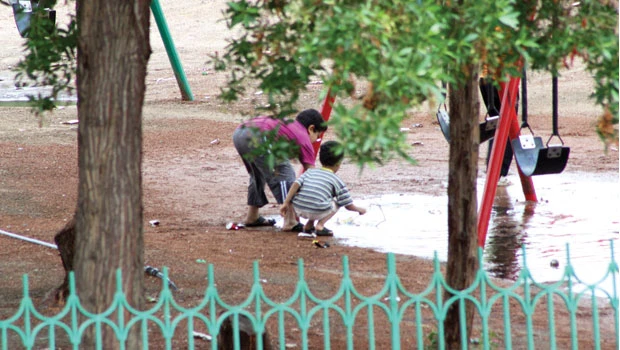
“Although it is the municipality’s duty to control mosquitoes that carry dengue fever, we are also trying to raise awareness among the public to avoid contact with stagnant water and not to let children play in the dirty water pools,” Badawood told Arab News.
He stated that people should protect themselves by using mosquito repellants, as well as ensuring that windows are adequately covered.
“The most important thing is that if parents find that their children are running a very high fever, they must get them to hospital immediately,” Badawood said.
On Monday, the Health Affairs’ preventive medicine department warned that the number of infectious disease cases could increase over the next few weeks if the situation is not monitored carefully.
The four cases of malaria include two Indians, one Yemeni and one Sudanese.
Dr. Noha Dashash, assistant director of Health Affairs in Jeddah, explained that the malaria cases were not due to the floodwaters.
“These cases are nothing abnormal, as we usually experience a low number of imported malaria cases annually from other countries or other parts of the Kingdom, but never in Jeddah,” she said.
She confirmed the Health Affairs Department’s fear over the spread of dengue fever, as current environmental conditions were favorable for the breeding of mosquitoes that spread the illness.
To control the number of mosquitoes and minimize the risk of an outbreak of dengue fever and other diseases, the municipality has increased its pesticide spraying, beginning in the most flooded areas of the city.
“The major concern right now is Kandarah, Baghdadiah and Balad, as these are some of the districts most severely flooded and where stagnant water is most likely to create a breeding ground for mosquitoes,” said Amer Hamzah Asiri, supervisor of the municipality’s fumigation and research program.
Asiri, who also works in the biochemistry department at King Abdulaziz University, said that in the coming weeks teams would be going to the east of the city to spray pesticides and work their way north.
He said since the operations began, the municipality has increased the number of workers from 150 to 500 in order to cover a larger area in a quicker amount of time.
He advised residents to make sure that water tanks are adequately cleaned to reduce the risk of a cholera outbreak as well.
There has been a constant battle to eradicate stagnant water in the city. Trucks have been continuously removing water from flooded streets, only to find that sewage water is seeping up from underground in exactly the same locations.