
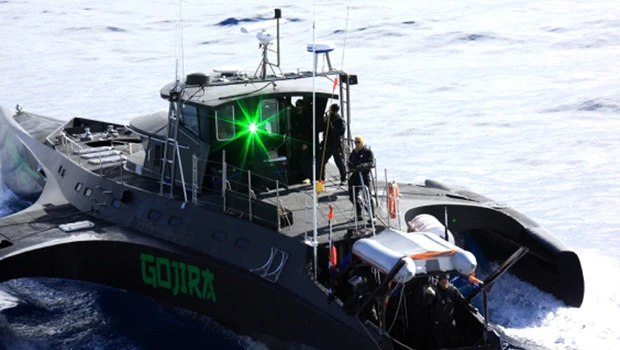
- TOKYO: Obstruction by a hard-line anti-whaling group has forced Japan to cut short its Antarctic whale hunt, the fisheries minister said on Friday, the first time the fleet is heading home early due to clashes with activists.
Repeated attempts by the Sea Shepherd Conservation Society to block the hunt have caused irritation in Japan, one of only three countries — along with Norway and Iceland — that now hunt whales. The government describes the hunt as an important cultural tradition.
“It has become difficult to secure the fleet’s safety,” Fisheries Minister Michihiko Kano told a news conference. “We have no choice but to cut short our research.”
Sea Shepherd described the decision as a victory for whales and said the movement was proving increasingly effective at disrupting the Japanese fleet’s operations.
“We didn’t do much differently, but got there early and intercepted them and disrupted them early before they could really begin,” Jeff Hansen, Sea Shepherd’s Australian director, said by telephone.
“Each year we’re costing them more and more money. It’s a heavily subsidised hunt and they’re spending and losing millions so we’re very much hurting them in the pocket.
“We’ll stay down there in the Southern Ocean, and if they return next season, we’ll be there to escort them northward.”
The Japanese fleet, made up of 180 people on four vessels, is heading back from its annual hunt about a month earlier than scheduled after catching 170 minke whales, around a fifth of its target, said Shigeki Takaya, a fisheries ministry official.
He said it was unclear how Japan would proceed in future with the hunt.
Japan had suspended the hunt last week after Sea Shepherd started to harrass the fleet’s mother ship.
Clashes between Japanese whalers and Sea Shepherd activists have escalated in recent years. The group had introduced a new high speed ship after another vessel sank following a collision last year with a Japanese whaling ship.
An activist was given a two-year suspended jail term by a Japanese court in July for boarding a whaling ship.
Japan introduced scientific whaling to skirt the commercial whaling ban under a 1986 moratorium, arguing it had a right to monitor the whales’ impact on its fishing industry.
Last year, Australia filed a complaint against Japan at the world court in The Hague to stop Southern Ocean scientific whaling. The decision is expected to come in 2013 or later.
The last time Japan shortened its Antarctic whaling expedition was in 2007, when a fire killed a crew member aboard the flagship and and crippled the vessel.