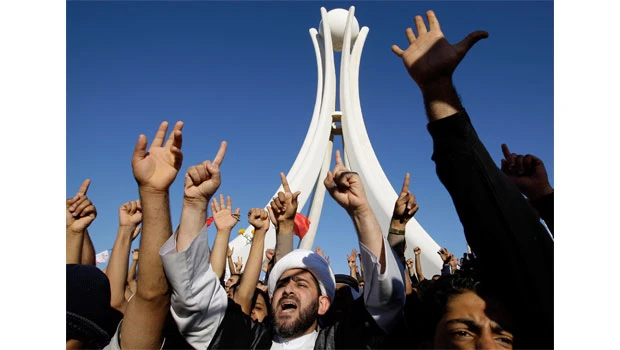
- MANAMA: Thousands of singing and dancing protesters streamed back into Manama's central Pearl Square on Saturday after Bahrain's leaders withdrew tanks and riot police following a bloody crackdown by security forces.
Crown Prince Salman bin Hamad Al-Khalifa, deputy supreme commander of the armed forces, ordered the military pullout and appealed for calm and political dialogue in a brief address on state TV.
The authorities had been determined to prevent protesters from turning Pearl Square into a base like Cairo’s Tahrir Square, the heart of a revolt that ousted Egypt’s Hosni Mubarak.
On Thursday, riot police staged a night-time attack on sleeping protesters who had camped out there, killing four and wounding 231 protesters.
Sixty to 80 people were taken to Salmaniya hospital after being affected by teargas or hit by rubber bullets, a doctor said on Saturday. He said the hospital was full and did not have enough oxygen to deal with the rush of casualties.
More than 60 people were already in the hospital with wounds sustained on Friday when security forces fired on protesters as they headed to Pearl Square, then still in military hands.
After ordering the military to back off, Salman called for a national day of mourning “for the sons we have lost,” the state news agency reported.
“I stress, once more, that our duty is to preserve security and stability, to ensure that there is no discord and that the situation does not worsen,” he said in a statement.
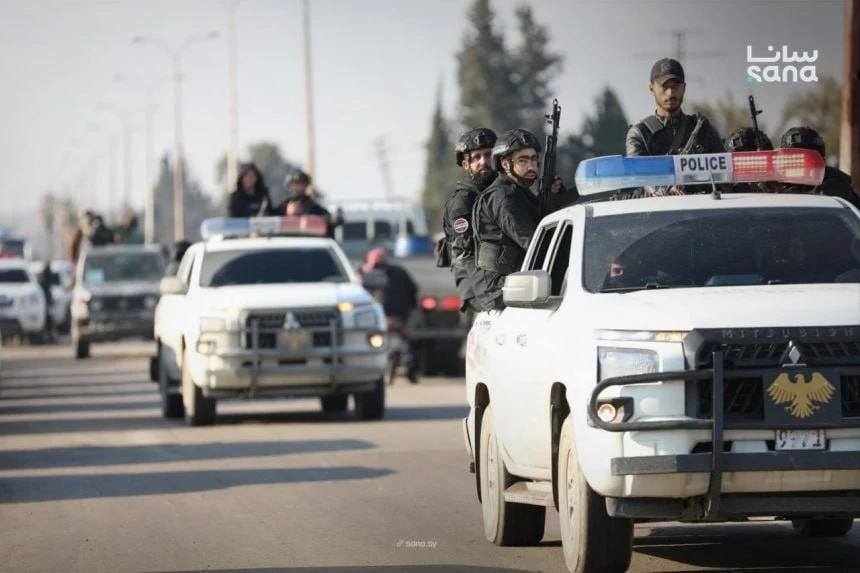
With the military pullout, crowds approached the square from different directions, creating a standoff with riot police who had moved in earlier to replace the army troops.
Suddenly police raced to their buses, which drove away mounting kerbs in their haste to escape.
The protesters, cheering and waving national flags, ran to the center of the traffic circle, reoccupying it even before all the police had left. The crowd waved fleeing policemen through.
People circling through the square clapped, whistled and wept. Some wore white sheets symbolizing their readiness to embrace death, while others carried Bahraini flags, flowers and signs that said "Peaceful."
“We don’t fear death any more, let the army come and kill us to show the world what kind of savages they are,” said Umm Mohammed, a teacher wearing a black abaya cloak.
The crowds in Pearl Square soon swelled into the tens of thousands, celebrating a triumph for the mostly Shiite protesters who took to the streets on Monday, inspired by popular revolts that toppled leaders in Egypt and Tunisia.
As night fell, defiant protesters erected barriers, wired a sound system, set up a makeshift medical tent and deployed lookouts to warn of approaching security forces.
US President Barack Obama spoke to the king on Friday, condemning the violence and urging the government to show restraint and respect the rights of its people.
British Foreign Secretary William Hague also expressed concern about "clearly unacceptable and horrifying" violence against demonstrators in Bahrain.
The crown prince’s orders to withdraw the military from the streets were issued a few hours later.
The crown prince has been delegated by the royal family to open a dialogue with the opposition. "The sooner we return to calm, the sooner we can reach our goals," Salman said. "Citizens of Bahrain, let's work together with all political blocs to help return the security situation to normal so we can announce a day of mourning for those we've lost."
A leader of Al-Wefaq, the main opposition group, said the crown prince "did the right thing" by withdrawing security forces from the streets and letting people return to Pearl Square. "The crown prince opened the door for dialogue because he prevented more killing from occurring and allowed people to demand their rights," said the leader, Abdul-Jalil Khalil.
“That’s a very positive step,” said Jasim Hussain, another member of the Wefaq bloc that quit parliament on Thursday, told Reuters. “They’re trying to ease the tensions. I don’t know whether it will be sufficient.”
Wefaq had earlier rejected the king’s dialogue offer, saying troops must be withdrawn first, among other conditions.
Some protesters were wary, despite the military withdrawal.
"Of course we don't trust them," said Ahmed Al-Shaik, a 23-year-old civil servant. "They will probably attack more and more, but we have no fear now." He was skeptical that dialogue could proceed after the crackdown and said the government should step down.
Hassan Youssef, 33, said the crown prince's speech was self-serving. "He is afraid for his Formula One contract and thinks by just telling us to calm down we will listen," Youssef said. "We want the entire royal family to step aside. We don't want dialogue."
Bahrain's main labor union called an indefinite strike from Sunday to protest police violence and demand the right to demonstrate peacefully.
Ibrahim Sharif, head of the opposition Waad Society, said that pulling the armed forces off the streets of Manama was not enough and demanded guarantees that protesters can stage rallies without fear of being attacked. Waad is an umbrella group of protest factions.
Another Wefaq lawmaker said the troop pullout was not enough by itself. “There’s no difference if people are killed by the military or by the security forces,” said Ibrahim Mattar.
“We hope to hear a clear message from the government that it will stop killing people who are protesting peacefully.”
Mattar said the king must accept the “concept” of constitutional monarchy, as well as withdrawing the military.
“Then we can go for a temporary government of new faces that would not include the current interior or defense ministers.”
He reiterated an opposition demand for the king to fire his uncle, Sheikh Khalifa bin Salman Al-Khalifa, prime minister since Bahrain gained its independence in 1971.
Bahrain’s 70 percent Shiite majority has long felt discriminated against in the Gulf Arab island that is ruled by a Sunni Muslim dynasty and is a close US and Saudi ally.
Shiites feel cut out of decision-making and complain of unfair treatment in access to state jobs and housing.