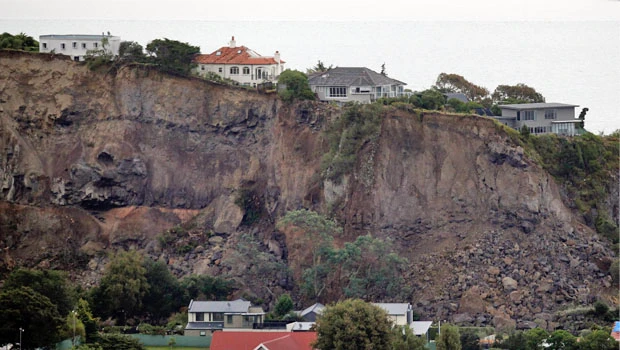
- CHRISTCHURCH, New Zealand: Distraught relatives desperate for news of loved ones missing in New Zealand’s quake-devastated city of Christchurch asked officials Friday why it was taking so long to identify bodies pulled from the debris.
The official death toll continued to climb, to 113, and officials said that no one had been pulled out alive since an initial 70 rescues from collapsed buildings in the first 25 hours after Tuesday’s magnitude 6.3 temblor.
Foreign Minister Murray McCully said the rescue phase involving hundreds of police, soldiers and others was drawing to a conclusion, and he was preparing to give families from several countries “the worst type of news.” An English language school was in one of the hardest-hit buildings, the CTV office block, and students from Japan, China, the Philippines and other nations are believed to be among those inside when it collapsed. Police say up to 120 bodies are still inside and that no one is expected to have survived.
Many relatives of the missing arrived at Christchurch airport on Friday, including about 20 from Japan, who were quickly whisked onto a bus by embassy officials.
At least one Japanese appeared to be among relatives of the missing who attended a meeting with a local coroner and disaster victim identification specialists at a school building Friday. Police Superintendent Derek Erasmus told reporters after the meeting that the families had asked many questions about the identification process of those killed, and the release of bodies.
When the families emerged from the meeting, many looking grim and shaken, one man shouted angrily at members of the media standing nearby. A police officer told journalists the meeting grew intense and that relatives were extremely upset.
Officials have released the names of just six victims — all Christchurch residents, including two infant boys — and are sticking to a painstaking process of DNA or other scientific identification before telling families, to avoid mistakes.
The process means that some of the 113 bodies that have been brought to a special morgue set up for the purpose are also included on the list of 228 people counted as missing.
Officials say they are working hard on reconciling the lists, and have appealed for patience.
At the airport earlier, Danny Campos, 27, stood in the arrivals hall with tears in his eyes, waiting for his uncle to arrive from Australia. His aunt, Elsa Torres, 53, was missing in the CTV building, where she worked as a translator for the language school.
“She’s a wonderful person. She’s a really clever person — really kind, really caring,” said Campos, whose family is originally from Peru. The family is “hoping that she’s alive, but unfortunately, we just have to sit down and wait.” In one bright moment amid the misery, Emma Howard, who was rescued Tuesday after her office block collapsed, went ahead with her planned wedding to Chris Greenslade. When she was trapped, Howard managed to contact Greenslade on her cell phone and get him to direct rescuers to where she was.
The couple didn’t speak to reporters at the ceremony Friday, but Howard told Radio New Zealand on Tuesday that going ahead with the wedding was a sign the disaster could not break people’s spirit.
Officials insisted that there was still hope that the massive effort involving more than 700 specialist teams from a host of countries could find someone else alive.
“We are still hopeful that there still may be people rescued but it’s getting less and less likely,” Civil Defense Minister John Carter told reporters.
Workers on Friday began gingerly picking through the piles of crumbled stone of the iconic Christchurch Cathedral, where the spire tower collapsed and where officials have said up to 22 bodies may lay entombed. The Christchurch City Council said workers started removing loose masonry from the site to allow recovery teams in to retrieve the bodies.
Another city emblem, the towering Hotel Grand Chancellor, had stopped moving on its foundations and was no longer in danger of imminent collapse, the Civil Defense Ministry said. Officials have said the badly listing building is beyond repair and will have to be demolished.
Parker said about half the city of 350,000 had water that might be contaminated and the other half had none, and urged all to take boil any water before drinking or cooking with it. The gradual restoration of power had reached 80 percent of the city, supplier Origin said.
Residents have been urged to stay near home to stay out of the way of recovery workers and avoid shaky buildings.
At Keller Street in the suburb of Avonside, residents were pulling together to clean up after the earthquake pushed masses of sludge and water into yards and the street.
Paul Stokes, 52, and his wife Yvonne, 51, and daughter Mikala, 15, had their house knocked off its foundations by the quake, though it was stable enough for them to stay inside. Stokes’ sister, Christine Lagan, dropped by Friday to take a load of laundry back to her home outside Christchurch.
“We’re all looking after each other,” Yvonne Stokes said. “Once you find out you can depend on other people ... you know that you are fine in your house and your home.”