
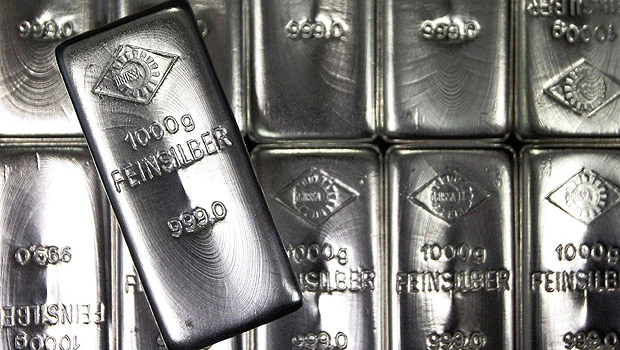
- NEW YORK/LONDON: Gold prices rose to within $10 of their record high on Tuesday, while silver hit a 31-year peak, as turmoil in Libya and unrest spreading across the Middle East prompted safe-haven buying of the metals.
The US said on Tuesday Libya could descend into civil war if Muammar Qaddafi refuses to quit as US demands for an end to his rule carried new weight after word of unspecified Western military preparations.
“What gold needed was a catalyst, and it found it in the form of tensions that are surfacing in the Middle East and rising oil prices, which served as an inflationary threat and also led to political instability,” said Mark Luschini, chief investment strategist of Janney Montgomery Scott, a brokerage that manages $53 billion in client assets.
Gold has rallied strongly since uprisings in Tunisia and Egypt unleashed a swathe of popular protests across the region, sending oil prices to 2-1/2-year highs and raising investors’ concern about the potential effects of high energy prices on economic growth.
Spot gold rallied to a session peak of $1,424.01 an ounce — its highest since Dec. 7, when it hit a record $1,430.95.
The metal was up 0.8 percent at $1,421.85 an ounce by 11:12 a.m. EST (1612 GMT), extending its winning streak to three consecutive trading days.
The recent surge in oil prices was unlikely to have a big impact on the US economy, but could dampen growth and raise inflation if sustained, Federal Reserve Chairman Ben Bernanke said on Tuesday.
Bernanke’s comments initially took some steam out of gold by supporting the dollar.
However, analyst said gold should benefit in the longer term as it is expected that the Fed will not raise interest rates to battle inflation, which could weigh heavily on gold.
US April gold futures rose 0.9 percent to $1,422.7 an ounce.
Bullion rose 6 percent in February, its largest monthly rise since August, when the US Federal Reserve first indicated economic growth was feeble enough to warrant a resumption in purchases of government bonds.
Since the Fed cut interest rates to 0.25 percent in,response to the global financial crisis in late 2008, the gold price has risen 70 percent, reaching a record $1,430.95 in December 2010.
A low-rate environment encourages investors to buy gold as it limits the opportunity cost, or premium relinquished for holding a non-yield bearing asset, of owning the metal.
Soaring food and energy prices have ignited inflation in emerging economies and have begun to push up consumer prices in the developed world, which raises the likelihood of tighter monetary policy, usually a negative for gold.
“I wouldn’t say there’s a clear direction at the moment,” said Simon Weeks, head of precious metals at Bank of Nova Scotia.
“The pendulum has swung back from (investors) being optimistic about economic recovery to being somewhat more cautious.”
In a reflection of investor ambiguity on gold, holdings of the metal dropped in the SPDR Gold Trust, the world’s largest gold-back exchange-traded fund.
Holdings fell for a fifth consecutive month in February, marking their worst string of declines since the creation of the fund in 2004.
Silver hit a fresh 31-year high at $34.57 an ounce and later was 1.9 percent higher at $34.46. Silver has risen about 11 percent this year, shrugging off the prospect of rising supply as industrial demand improves.
Platinum gained 1.4 percent to $1,830.24 an ounce, while palladium climbed 2.1 percent to $811.50 an ounce.