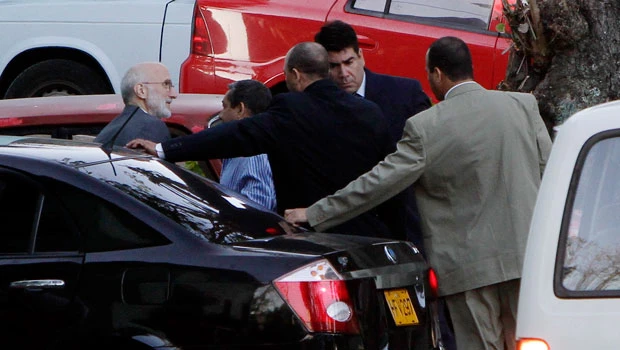
- HAVANA: The trial of a US government contractor detained more than a year on charges he sought to undermine Cuba’s government enters its second day Saturday in a case that has worsened relations between the longtime enemies.
Alan Gross, who was arrested in December 2009, stands accused of illegally bringing communications equipment into Cuba for Development Associates International as part of a USAID-backed democracy program.
Cuba says the programs are aimed at overthrowing the government of President Raul Castro. US officials and Gross’ family insist he has done nothing wrong, and say he should be freed on humanitarian grounds in any case. Gross faces 20 years in jail if convicted.
The trial began Friday with about nine hours of testimony in a courtroom in a converted mansion in a once-prosperous neighborhood of Havana. The proceedings were closed to journalists.
Cuba’s Foreign Ministry released a statement saying the trial would reconvene Saturday and indicated the proceedings could finish that day after presentation of further evidence and final statements from the prosecution and defense.
Sentencing, should Gross be convicted, would likely come in about two weeks.
In describing Friday’s session, the Foreign Ministry said Gross made a statement and answered questions of the prosecution, defense and court. It said other witnesses and experts also testified. It gave no specifics.
Gross’ family and US officials have said he was bringing communications equipment to Cuba’s 1,500-strong Jewish community. Cuban Jewish groups denied having anything to do with him.
In Washington on Friday, Secretary of State Hillary Rodham Clinton said the US government called on Cuba to release Gross and allow the 61-year-old Maryland native leave Cuba unconditionally.
“He has been unjustly jailed for far too long,” she said.
Washington spent $20 million a year on Cuba democracy programs in 2009 and 2010, with USAID controlling most of that and doling out the work to subcontractors.
Development Associates International, or DAI, was awarded a multimillion-dollar contract for the program in which Gross was involved, and Gross received more than a half million dollars through his company, despite the fact he spoke little Spanish and had no history of working in Cuba.
Gross traveled to the island several times over a short period on a tourist visa, apparently raising Cuban suspicions.
The USAID programs have been criticized repeatedly in congressional reports as being wasteful and ineffective. In March 2010, Sen. John Kerry, a Democrat from Massachusetts, and Democratic Rep. Howard Berman of California — both longtime critics of Washington’s 48-year trade embargo on Cuba — temporarily held up new funding in the wake of Gross’ arrest. The money has begun flowing again, though US officials say DAI is no longer part of the program.
Cuban authorities have not spoken publicly about the case against Gross. But a video that surfaced days before the charges were announced indicated prosecutors would likely argue that the USAID programs amounted to an attack on the island’s sovereignty.
Gross’ wife, Judy, has appealed to Cuba to release her husband on humanitarian grounds, noting that the couple’s 26-year-old daughter, Shira, is suffering from cancer and that Gross’s elderly mother is also very ill.
On a blog she started to track her cancer treatment, Shira Gross asks followers to keep her father in their thoughts.
“God listens to our prayers, so please pray for his release,” she wrote in an entry posted Thursday.