
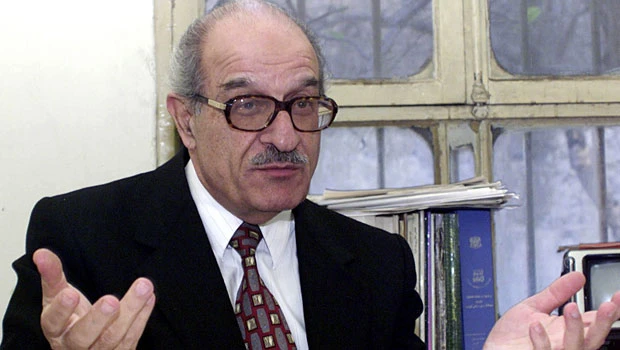
- BEIRUT: Syrian authorities have released an 80-year-old former judge, one of President Bashar Assad’s most outspoken critics, under an amnesty marking the anniversary of the 1963 coup which brought the Baath Party to power.
“He is at home, his condition is acceptable,” Khalil Matouk, one Maleh’s lawyers, told Reuters on Tuesday. “He was the only political prisoner included in the amnesty because he is over 70.”
Maleh was jailed for three years in July for “weakening national morale” after he criticized corruption in Syria and called on Assad to reveal the fates of tens of thousands of people missing since a government crackdown in the 1980s.
He was one of 13 political prisoners who went on hunger strike, a Syrian rights group said on Monday, to protest against “political detentions and oppression” in Syria.
Maleh was freed under a presidential amnesty marking the 48th anniversary of the 1963 coup when Syria’s Baath Party seized power, banning opposition and imposing emergency laws which are still in place. The amnesty covered those convicted of minor offenses and prisoners over the age of 70.
He spent six years as a political prisoner in the 1980s during the rule of Assad’s father, Hafez Assad, after he opposed what he described as the illegal takeover by the Baath Party of the judiciary and the Lawyers Union.
The United States has led calls for Syria to release Maleh and scores of Syrian writers, journalists, opposition figures and lawyers who have been jailed in the last five years.
The Syrian Observatory for Human Rights had said on Monday that 12 other prisoners went on hunger strike alongside him.
They included lawyer Anwar Al-Bunni, jailed for five years in 2007, writer Ali Abdallah, who faces a military trial for criticizing Syria’s ally Iran, and Mahmoud Barish, who is also standing trial for criticizing corruption in Syria.
“The time has come to end this state of oppression, in line with the winds of democratic change sweeping through the Arab world,” the organization quoted the prisoners saying.
They said that rights could not be “legitimate in Egypt and Tunisia and other countries, and not legitimate in Syria.”
Syrian authorities have intensified a long-running campaign of arrests of dissidents and opposition figures since mass protests overthrew rulers in Egypt and Tunisia.