
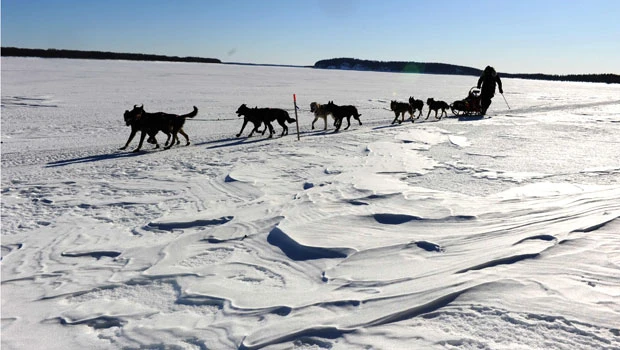
- ANCHORAGE, Alaska: Hugh Neff had the lead in the Iditarod Trail Sled Dog Race late Friday, when he also dined on a gourmet meal and was awarded $3,500 in cash.
Neff was the first musher to arrive Friday in Anvik. That meant he was treated to a meal whipped up by chefs from a luxury Anchorage hotel, who flew in and prepared it on cook stoves.
The leaders were more than halfway through the 1,840-kilometer (1,150-mile) race from Anchorage to Nome, with the winner expected to reach the coastal gold-rush town early next week.
Late Friday, Neff was on the trail out of Grayling, about 684 kilometers (490 miles) from the finish. Following him out of Grayling within an hour were John Baker, four-time defending champion Lance Mackey and Ray Redington Jr.
The race began last weekend with 62 teams. Seven have scratched or withdrawn.
In the past, some mushers who received the “First Musher to the Yukon Award” have skipped the meal, preferring instead to keep to their race plan and not succumb to the temptation of rich food, wine and the adoration of race fans. But Neff chose to enjoy Anvik and the meal at the checkpoint more than halfway through the race.
“It is one of those things that just kind of pumps you up because you know you are up front,” said Iditarod musher Linwood Fiedler, who was first into Anvik in 2001 and finished second that year. “It is definitely a mental boost.” Neff and the other mushers heading out onto the frozen Yukon River will need a mental boost.
The trail on the river is dreaded by many Iditarod mushers because of its long, boring stretches of nothingness.
Mushers have been known to be so sleep-deprived and so bored by this section of trail that they simply fall off their sleds. Some have been blown off by the winds that whip through the wide, frozen expanse.
There are basically three sections to the Iditarod Trail.
The first third requires mushers to go through the Alaska Range, going from 77 feet to 3,700 feet above sea level.
The next is through the hilly Interior and onto the Yukon River. That is where dog teams that don’t like running into the wind can quit and where mushers fight mental battles to keep their heads in the race. The final third is a long sprint up the coast and to Nome.
That is where sudden blizzards creating whiteout conditions have blown away more than a few mushers’ dreams of winning the Iditarod. In 2009, Mackey got his team to go in a blizzard and into the wind whipping across the sea ice of Norton Sound, but musher Jeff King, another four-time winner who retired after last year’s race, returned to the Shaktoolik checkpoint to wait it out. Mackey went on to win.
This year, Mackey has had other problems with his dogs.
Mushers normally start with 16 on their team and drop a few along the trail if they are aren’t performing well. But Mackey was down to 12 dogs early on and had only nine on Friday.
Fiedler said he wouldn’t make too much out of Mackey having only nine dogs.
Mushers need good pulling power provided by bigger teams early in the race, not on the Yukon or when they reach the coast, Fiedler said.
Besides, Mackey is famous for jumping off the back of his sled and running up the hills with his team.
“He’s an animal that way,” Fiedler said. “I wouldn’t want him behind me.”