
- SEOUL/JAKARTA: Japan’s neighbors pledged to ramp up liquefied natural gas (LNG) exports to the quake-stricken nation on Friday, helping the world’s third-biggest economy to replace the power supply crippled by the disaster.
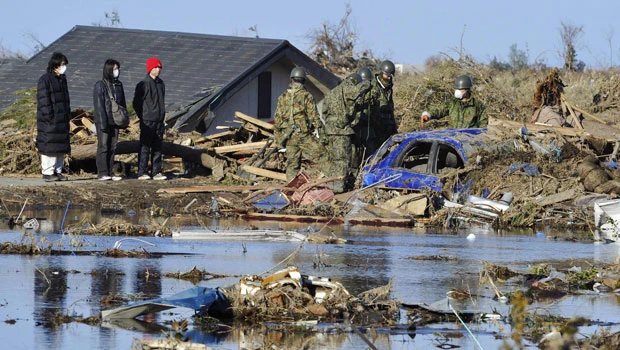
Japan’s worst earthquake on record has sparked a nuclear crisis and caused the loss of around 9,700 megawatts (MW) of nuclear and 10,831 MW of thermal power generation, leaving millions without electricity in the midst of wintry weather.
However, delays and damage at Japanese ports following the 9.0 magnitude quake and tsunami, which also forced the shutdown of several coal-fired power plants, prompted the diversion of coal shipments bound for Japan to other countries.
South Korea would supply 400,000-500,000 tons of LNG to its neighbor, as requested by Japanese utilities, while Indonesia, Japan’s third-largest LNG supplier, said it may export excess LNG supplies to its major infrastructure investor.
“We will continue to discuss with Japan possible further supplies if needed, while we maintain sufficient inventory levels,” said a Korean government source.
South Korea’s current LNG inventory stands at 1.5 million tons, and the source added that the supply to Japan would come from incoming shipments, not current inventory.
Evita Legowo, director general for oil and gas at Indonesia’s energy ministry said the Bontang plant, on Borneo island, is expected to see output fall 6 percent this year, but it has surplus LNG left over from last year that could be shipped to Japan.
“We may do that for the non-export committed LNG from the Bontang plant,” Legowo told reporters.
Energy officials could not say how much gas was available from a field operated by Total , but one government minister said the decision would go up to the president, given Indonesia is trying to conserve LNG for its own growing domestic demand but also please Japan, a major infrastructure investor.
Earlier this week, Indonesian oil and gas watchdog BPMigas said 20 LNG cargoes from Pertamina’s Bontang plant were available for auction.
Japan is the world’s top importer of LNG, bringing in 70 million tons of the fuel in 2010, and may need to import an extra 1 billion cubic feet per day to compensate for the 9 gigawatts of nuclear power lost, analysts said.
Japan has largely relied on deals directly with producers and state governments to procure the additional LNG it needs, a strategy which has put a cap on LNG spot prices.
Still, global LNG prices rose about 10 percent this week, with prices between $10 and $11 per million British thermal units (mmBtu), up from below $10 per mmBtu before the quake.
China and South Korea have also signalled they will increase oil product supplies to Japan, with PetroChina selling 200,000 tons to Japan, and South Korea’s four refiners seeking to ship about 4.5 million barrels so far, as Japanese refiners struggle with the loss of a third of their 4.5 million barrel-per-day (bpd) refining capacity.
PetroChina supplied Japan 170,000 tons of gasoline, diesel and fuel oil from its 115,000 barrel-per-day joint-venture refinery in Osaka, barrels that were diverted from other buyers.
The supply diversion from South Korea comes as regional diesel, jet fuel and fuel oil markets are supported by expectations of stronger demand for utility fuel in Japan to replace the loss of nuclear power and refining production, coming on the back of fears over Middle East tensions.
But Japan is turning away coal and some crude shipments due to the loss refining capacity, shutdowns of coal-fired power plants and port disruptions.
Indonesian coal shipments are being re-directed to China as two of Japan’s largest utilities, Tokyo Electric Power and Tohoku Electric declared force majeure on some coal deliveries due to shut power plants and damaged port facilities, with other utilities expected to declare force majeure as well.
“A couple of ports have already declared force majeure,” Bob Kamandanu, chairman of the Indonesian Coal Mining Association said.
“A couple of vessels have also been re-directed. It could be to China because China is still short.”
He could not give details on quantities, but Kamandanu said the damaged north-east Japanese power plants use around 10 million tons of coal per year and he expected the quake-hit ports to be out of action for a minimum of six months.