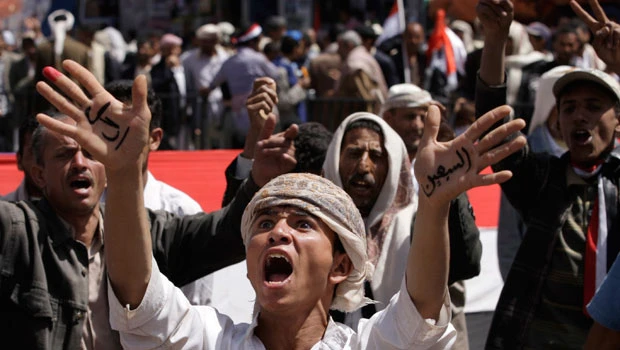
- SANAA, Yemen: Tens of thousands of people joined a funeral procession Sunday for protesters killed by government gunmen and the Yemeni president’s own tribe called on him to step down, depriving the embattled leader of vital support.
Yemen’s ambassador to the United Nations and its human rights minister resigned to protest the crackdown, further undermining President Ali Abdullah Saleh.
Saleh, who fired his government on Sunday, apparently shifted tactics in the capital, disbanding police and special forces around Sanaa University, which has been the center of the deadly crackdown, and replacing them with a largely unarmed force. “From now on, we will be controlling the entrances and exits of the square by orders from the supreme military command,” said Lt. Col. Mohammed Hussein.
Friday was the bloodiest day of the monthlong uprising against Saleh, and government snipers killed more than 40 protesters.
People living in apartment buildings around the square tossed down flowers at Sunday’s funeral procession. Electricity was cut off for about three hours in Yemen’s major cities, and activists accused the government of trying to block people from seeing television coverage of the march. Cell service was also interrupted.
Opposition parties taking part in the procession said they had have changed their position from demands for political reforms to calls for Saleh’s removal.
“Our only choice now is the removal of the regime soon. We stand by the people’s demand,” opposition leader Yassin Said Numan told The Associated Press.
Human Rights Minister Huda Al-Ban said she was stepping down to protest the government’s “horrible, coward and perfidious crime.”
And a Foreign Ministry official said that UN Ambassador Abdullah Alsaidi had sent in his letter of resignation. Health Minister Abdul-Karim Rafi told reporters the killing of protesters was “a crime unacceptable by logic or could be justified.”
Prosecutor-General Abdullah Al-Ulty said that 693 protesters were hurt and some bodies have not yet been identified.
Mohammed Naji Allaw, a lawyer and activist, said the government offering money to victims’ families to not cooperate with the investigation, and was pressuring them not to participate in the funeral procession.