
- Lebanon, known as a center for cosmetic surgery in the Arab world, is also leading the way in implant dentistry.
- The ITI (International Team for Implantology) Middle East Section is hosting in Beirut, on May 6-7, its first section congress: “Setting the trends in implant dentistry over 30 years.”
“Lebanon has had dental schools since more than 75 years. This issue is an important factor for the development of any technology in the country. However, the patients’ demands and expectations create the need of doing it to a high standard. Lebanon was the first country in the Middle East to have good medical schools with scientific exchanges with the West,” says Dr. Georges Gebran, chairman of ITI Middle East Section.
“This event promises to combine excellence and expertise in the field of implant dentistry. As the focus of the field has moved away, from the implant itself toward diversifying treatment approaches and varying degrees of cases complexity, accompanied by higher patient expectations, the ITI Middle East Section congress reflects these concerns in its scientific program.” The American Dental Association recognizes dental implants as the most successful replacement for a single missing tooth because it is functionally effective and durable.
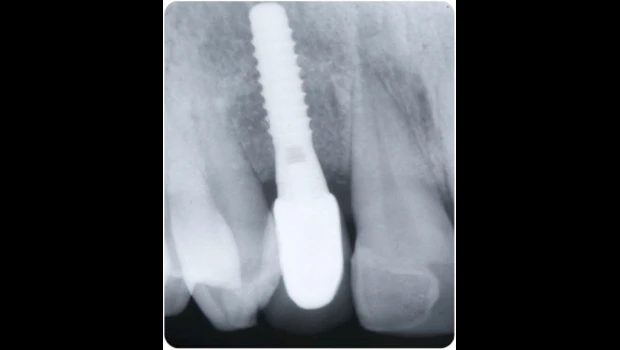
A dental implant is a fixed substitute for roots of missing teeth. It is embedded in the jawbone, and acts as an anchor for a replacement tooth, known as a crown.
Incidentally, the first dental implants were found with the ancient Mayas. A young woman received what is perhaps one of the world’s first dental implant made from pieces of shells shaped to resemble teeth. Similar discoveries were made when excavating ancient mummies with implants made from ivory.
Many centuries later, in 1951, a Swedish professor, Per-Ingvar Branemark, and his research team studied microscopic aspects of the bones healing process. During one of their experiments, they screwed a metal titanium cylinder into the thighbone of an animal. After some time, upon closer examination, Professor Branemark observed that the titanium cylinder had fused with the bone. Since titanium does not interact adversely with biological tissues, it did not take long to realize, the great potential of this technique. During his studies, following this discovery, Professor Branemark found that titanium screws could be used as metallic anchors in the jawbone so they can receive the replacement teeth and hold them in place.
If you are considering dental implants you must know that experience is very important. Not everyone can do implants well; you need to find a dentist with surgical and prosthetic implant experience. Inserting dental implants is a highly technical and sensitive surgical and prosthetic procedure, which requires a high level of expertise. There are risks for dental implants if not done correctly the first time. These include local infection, failure, bone loss and even nerve injury.
The questions you need to ask before having dental implants are: What type of training did you get? How long have you been doing implants? How many implants have you done? And what is your success rate? To prevent something going wrong and avoid experiencing complications, patients should only use a dental implant specialist with years of experience and extensive training and certification.
Although cheap implants are available on the market, Dr. George Gebran believes that we have to wait at least 10 years and reevaluate their long term results to judge whether these cheap implants are successful or not. And the results should be published in eminent scientific journals. “Many implant systems are on the market. I recommend a screw design with a rough surface, a brand which guarantees long term stability of the product. To play it safe, I use systems with at least 20 years of follow up on their products.”
A team of researchers at Caltech and the Lawrence Berkeley National Laboratory have created a new alloy made with palladium and small fractions of phosphorous, silicon, germanium and silver. This new material, stronger than steel, and misleadingly called palladium glass (it is not transparent), is currently seen as having the best applications in dental implants. Chances are that this new metallic glass implant could be used as dental implants as early as 2016.
According to the American Association of Oral and Maxillofacial Surgeons, 69 percent of adults aged 35-44 have lost at least one tooth due to decay, disease or trauma, and 26 percent of adults have lost all permanent teeth by age 74. Since the 1980s, dental implants have been catching on as the preferred method of tooth replacement. Guidelines for implant dentistry were set during the Toronto Conference in Clinical Dentistry in 1982. From that time onward, the public began to accept that dental implants were safe. It is estimated that more than 800,000 patients have benefited from dental implant techniques since 1965. According to statistics, the success rate of dental implants over a 15-year study period is about 95 percent for the lower jaw and 90 percent for the upper jaw.