- JEDDAH: Saudis are uninterested in becoming taxi drivers for local companies, according to an official at the Jeddah Chamber of Commerce and Industry (JCCI).
“The young Saudi people do not want to work as taxi drivers under the umbrella of the local taxi companies, making Saudizing the sector very difficult,” said Mohammed Al-Qahtani, chairman of the General Taxi Committee at the JCCI.
He said this was mainly because Saudis willing to operate taxis could purchase their own cars under various social welfare programs and there was no need for them to work for others.
He said lately taxi companies have been asking the government to provide 7,000 Saudi drivers through the JCCI to comply with Saudization rules and only 17 names were given, of which only two showed up.
“We are trying to get the message across to taxi companies that hiring Saudis is the most economical choice versus foreign laborers, because local workers eliminate the need to pay for airline tickets, recruitment fees, and iqama renewals, but without interested Saudis this has been a difficult thing to promote,” Al-Qahtani told Al-Eqtisadiah newspaper.
As many as 20,000 Saudi cab drivers currently operate on individual licenses using their own cars to avoid having to pay a cut of the profits to taxi companies, he said.
Moreover, Saudis working individually do not need to worry about regulations requiring them to have newer cars and can work with older models, unlike taxi companies.
In 2003, as part of efforts to gradually Saudize the sector, taxi companies were ordered by royal decree to implement Saudization in four phases.
Six years after the deadline passed, only 30 percent of taxi companies are committed to Saudization, according to Al-Qahtani.
“Currently, there are as many as 35,000 taxis operating in Jeddah, 40,000 taxis operating in Riyadh and 100,000 operating Kingdomwide, with only 30 percent of the sector Saudized,” he said.
In a 2003 interview with Arab News, Faisal Al-Ajwad, an owner of a taxi company in Jeddah, said that finding enough Saudi drivers to comply with Saudization regulations was a problem.
“Many taxi operators say that they have not been able to convince Saudis to work as drivers and the labor offices have failed to supply an adequate number of Saudi drivers for our ever-expanding fleet,” Al-Ajwad said.
Since then, many taxi companies have said they have even gone bankrupt trying to satisfy Saudization regulations, despite Saudis saying they are uninterested in becoming drivers.
“I worked as a driver for a few months with a taxi company in Jeddah and was required to remit SR120 per day, amounting to about SR3,000 a month, in collection,” 26-year-old Mohammed Abdul Qader told Arab News.
“I usually brought in around SR5,000 to SR5,500 per month overall by working nearly 12 hours per day except Fridays, which ultimately meant I could barely make SR2,000 per month. In addition, the traffic police have been targeting taxis in order to meet their quota on traffic tickets issued daily. Due to these obstacles, I decided it was not worth the time and effort for the sake of around SR1,200 to SR1,500 per month.”
Competing with foreigners and discrimination from other Saudis is also another reason many Saudis have decided driving taxis is not for them.
“When a Saudi taxi driver tries to charge a certain fee to make enough money to support himself and his family in the Kingdom, it is regarded by passengers as too high. Many passengers opt for a foreign driver who is able to charge a reduced rate,” said Abdulghani Jabalawi, a 27-year old Saudi taxi driver, who supports his mother, younger sister and brother.
He also stated that many Saudi passengers prefer to hire foreign drivers rather than Saudis due to social stigma.
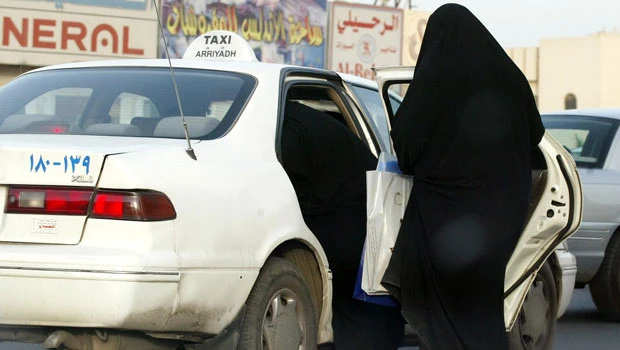
“As soon as some Saudi women see a Saudi driver, they slam the door quickly and try to find a foreign driver,” Jabalawi told Arab News, adding that many women like to be able to talk freely on their mobiles or with friends.
“They like to have more control when in the car. This would not be the case with a Saudi driver.”