- AJDABIYAH, Libya: Muammar Qaddafi's ground forces recaptured a strategic oil town Wednesday and were close to taking a second, making new inroads in beating back a rebel advance toward the capital, Tripoli.
- Western powers kept up the pressure to force Qaddafi out with new airstrikes to weaken his military, hints that they may arm the opposition and intense negotiations behind the scenes to find a country to give haven to Libya's leader of more than 40 years.
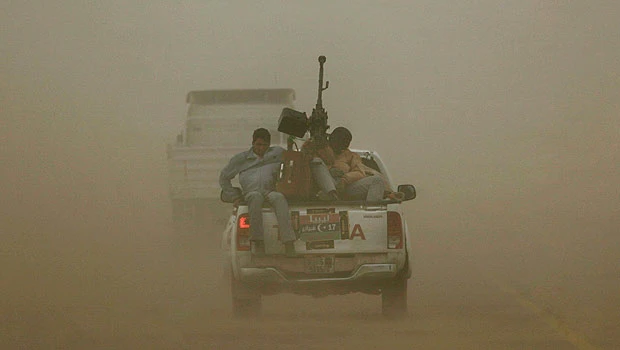
Airstrikes have neutralized Qaddafi's air force and pounded his army, but his ground forces remain far better armed, trained and organized than the opposition. The rebels, with few weapons more powerful than rocket-propelled grenades and machine guns, can attack targets 5 to 6 km away, but the loyalists' heavy weapons have a range of 20 km.
That disparity was obvious as government forces pushed back rebels who just two days earlier had been closing in on the strategic city of Sirte, Qaddafi's hometown and a bastion of support for the longtime leader. Under heavy shelling, rebels retreated from Bin Jawad on Tuesday and from the oil port of Ras Lanuf on Wednesday.
Qaddafi's forces were shelling Brega, another important oil city to the east. A rebel soldier, Col. Abdullah Hadi, said he expected the loyalists to enter Brega Wednesday night.
"I ask NATO for just one aircraft to push them back. All we need is air cover and we could do this. They should be helping us," Hadi said.
To make matters worse for the rebels, Libya's government warned that it would sue any international company that concluded energy deals with the rebels. The threat is likely to make it more complicated for the rebels based in eastern Libya to sell oil on the international market, a trade they had been counting on to finance their insurgency against Qaddafi.
"The Libyan state will sue any party that seals deals regarding Libyan oil with parties other than the National Oil Corporation," a government communiqué carried by the Jana news agency said.
On Monday, Qatar became the first Arab country to recognize the rebels. A US official said crude oil sales by Libyan rebels would not be subject to US sanctions if they were not connected to Qaddafi's government entities.
As Qaddafi's forces push rebels toward their de facto capital Benghazi, some 220 km northeast of Brega, pressure is growing on NATO members and other supporters of the air campaign to do more.
British Prime Minister David Cameron said his country believes a legal loophole could allow nations to supply weapons to Libya's rebels, but stressed the UK has not decided whether it will offer assistance to the rebels.
US Secretary of State Hillary Clinton said Tuesday that Washington also believes it would be legal to give the rebels weapons. As to whether the country would do so, President Barack Obama told NBC: "I'm not ruling it out, but I'm also not ruling it in."
France, one of the strongest backers of international intervention in Libya, believes arming rebels would require a new UN resolution; the existing one includes an arms embargo. But Foreign Minister Alain Juppe said: "We are ready to discuss it with our partners."
Under the UN resolution authorizing necessary measures to protect civilians, nations supplying weapons would need to be satisfied they would be used only to defend civilians — not to attack Qaddafi's forces.
Cameron's spokesman Steve Field said British and other diplomats were involved in negotiations with the rebel leadership in Benghazi partly to gauge if the opposition would be trustworthy allies.
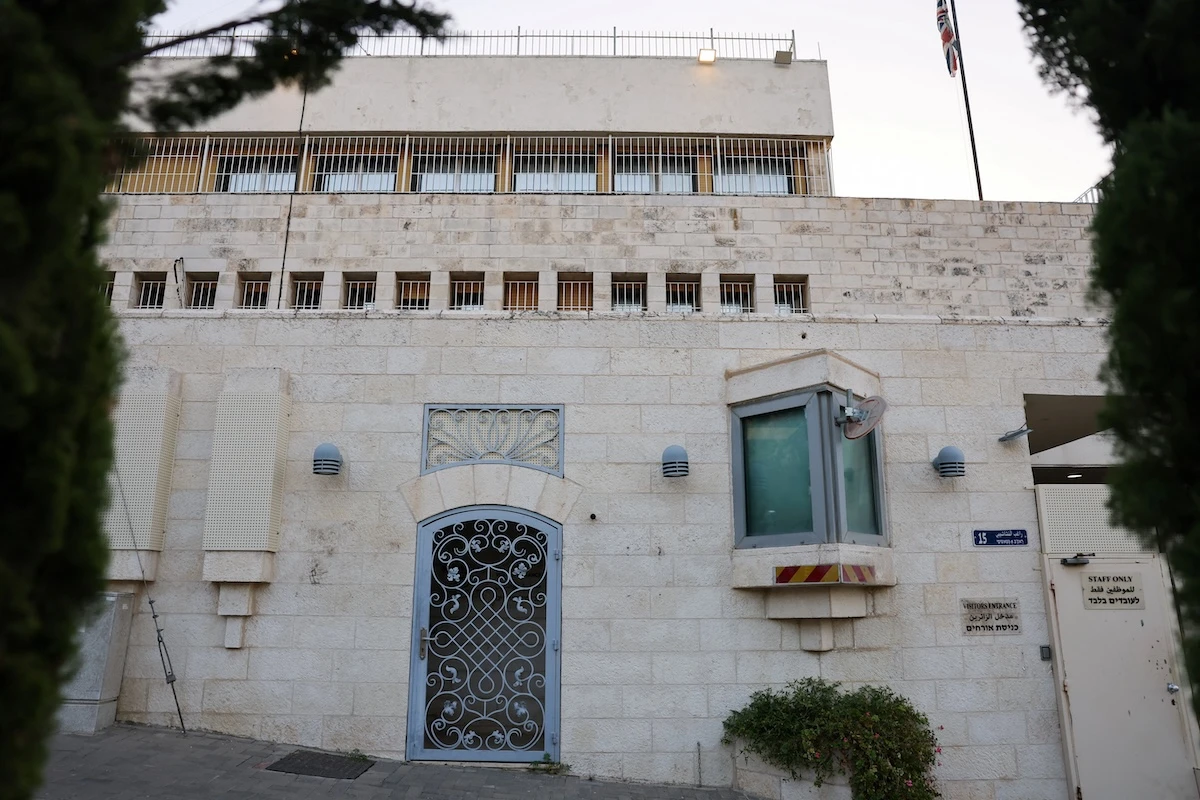
Britain said it has expelled five Libyan diplomats to protest at the Libyan government's actions and because they could pose a threat to national security.
Diplomats were attempting to persuade Qaddafi to leave without military force.
Italian Foreign Minister Franco Frattini said negotiations on securing Qaddafi's exit were being conducted with "absolute discretion" and that there were options on the table that had not yet been formalized.
Uganda appeared to be the first country to publicly offer Qaddafi refuge. The spokesman for Uganda's president, Tamale Mirundi, told the AP on Wednesday that he would be welcome there. Uganda, however, is a signatory to the statute that created the International Criminal Court, whose chief prosecutor is deciding whether to seek an indictment against Qaddafi.