
- JEDDAH: The new Makkah Metro project has been found economically viable as the holy city’s population is expected to reach more than 2.5 million and the number of Haj and Umrah pilgrims is projected to hit 16 million annually by 2030.
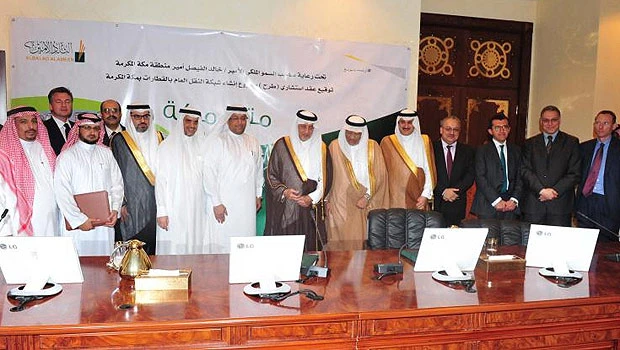
This was announced following the signing of a consultancy agreement with Ernst & Young for the flotation of the 180-km railway network project that covers all parts of the city. Makkah Gov. Prince Khaled Al-Faisal presided over the signing ceremony.
The new transport system in the central region of Makkah should take into consideration the return of more than 1.1 million worshippers after prayers at the Grand Mosque, especially during the peak season of Ramadan, the feasibility study said.
The railway stations near the Grand Mosque would be designed in a special manner to accommodate a large number of people at a time. There will be a queue system whereby passengers who arrive first will board the train and others will wait for their turn.
The queue system is important in order to avoid stampedes as thousands of worshippers could rush to the station to catch trains, especially during peak seasons. The new railway system with 88 stations is expected to bring about a qualitative change in the city’s transport system.
The project is being carried out by the Al-Balad Al-Amin Company with a capital of SR1.2 billion. “The Makkah Metro project includes construction of four railway networks linking all parts of the holy city,” said Makkah Mayor Osama Al-Bar, who is also chairman of the company’s board of directors.
“This is the last phase before implementing the project,” the mayor said, adding that work on the new railway would start within a year. He said the metro would cover not only the present residential districts of the holy city but also areas to be developed in the future.
Al-Balad Al-Amin has completed the technical study for the project, which will be offered for bidding in the third quarter of this year. The new railway system will be linked with the Haramain Railway that connects the cities of Makkah, Madinah and Jeddah as well as the Mashair Railway, which links the holy city to Mina, Muzdalifah and Arafat.
Makkah’s present population is estimated at 1.8 million. In addition, more than 5 million faithful come for Umrah and about two million for Haj every year, increasing pressure on the city’s transport system.
Efforts are under way to expand the Grand Mosque on the eastern Shamiya side. The new project initiated by Custodian of the Two Holy Mosques King Abdullah would increase the mosque’s capacity to 1.6 million.
All of the growing number of pilgrims and worshippers cannot be accommodated in the central region of Makkah. Here comes the importance of the new Metro Makkah project, the study said.
The new railway system will help pilgrims staying in apartments in Aziziya and other far off places to come to the Grand Mosque for the five-time prayers easily, it pointed out.
The Mashair Railway was established at a cost of SR6.5 billion. It has a capacity to transport 72,000 pilgrims in an hour and has reduced the time for transporting pilgrims from Arafat to Muzdalifah and from Muzdalifah to Mina five minutes each. Pilgrims who used the facility during the last Haj season said that it has revolutionized transportation in the holy sites.