- CAIRO: Unlike the armies of Tunisia and Egypt, Syria's military will almost certainly stand by the country's leader as President Bashar Assad faces down an extraordinary protest movement.
Assad, and his father before him, stacked key military posts with members of their minority Alawite sect over the past 40 years, ensuring the loyalty of the armed forces by melding the fate of the army and the regime.
The power structure means there could be darker days ahead in Syria if the struggle for reform gathers steam. Analysts say the army would likely use force to protect the regime at all costs, for fear they will be persecuted if the country's majority gains the upper hand.
“If there is going to be a change in Syria, it is going to be a bloody change,” said Hilal Khashan, a political science professor at the American University of Beirut.
“Assad has the army, the intelligence and security agencies. These are strong agencies and they are specialized in internal oppression.” The uprising in Syria is one of the more astonishing in the region, given that the Assad family has kept an iron grip on power for 40 years, in part by crushing every whisper of dissent. But more importantly, they filled the country's most vital posts with Alawites, a branch of Shiite Islam that represents only about 11 percent of the population.
At least 80 people have been killed as security forces cracked down on three weeks of demonstrations that echo the uprisings spreading across the Arab world. In Egypt and Tunisia, the armies sided with demonstrators seeking to overthrow their entrenched leaders and provided the fatal blow each time.
However, Syrian protesters cannot count on such support.
Nevertheless, activists have called for protests to continue this week to honor the “martyrs” who have died.
Human rights activists already have criticized the security forces' response to the protests. Human Rights Watch says the regime is using “unjustified lethal force against anti-government protesters.” “For three weeks, Syria's security forces have been firing on largely peaceful protesters in various parts of Syria,” said Sarah Leah Whitson, Middle East director at Human Rights Watch. “Instead of investigating those responsible for shootings, Syria's officials try to deflect responsibility by accusing unknown 'armed groups.’”
The unrest in Syria, which exploded nationwide nearly three weeks ago, is a new and highly unpredictable element of the Arab Spring, one that could both weaken a major Arab foe of the West and cause dangerous instability in one of the more fragile and potentially chaotic countries of the Mideast. The unrest could have implications well beyond Syria's borders, given the country's role as Iran's top Arab ally and as a front line state against Israel.
Regime change in Syria would inevitably mean far greater powers for the Sunni majority - a concern for the country's closest ally, Shiite power Iran.
The protests began in Daraa, an agricultural city of about 300,000 near the border with Jordan, after security forces arrested a group of high school students who scrawled anti-government graffiti on a wall - apparently inspired by the popular uprisings sweeping the Arab world.
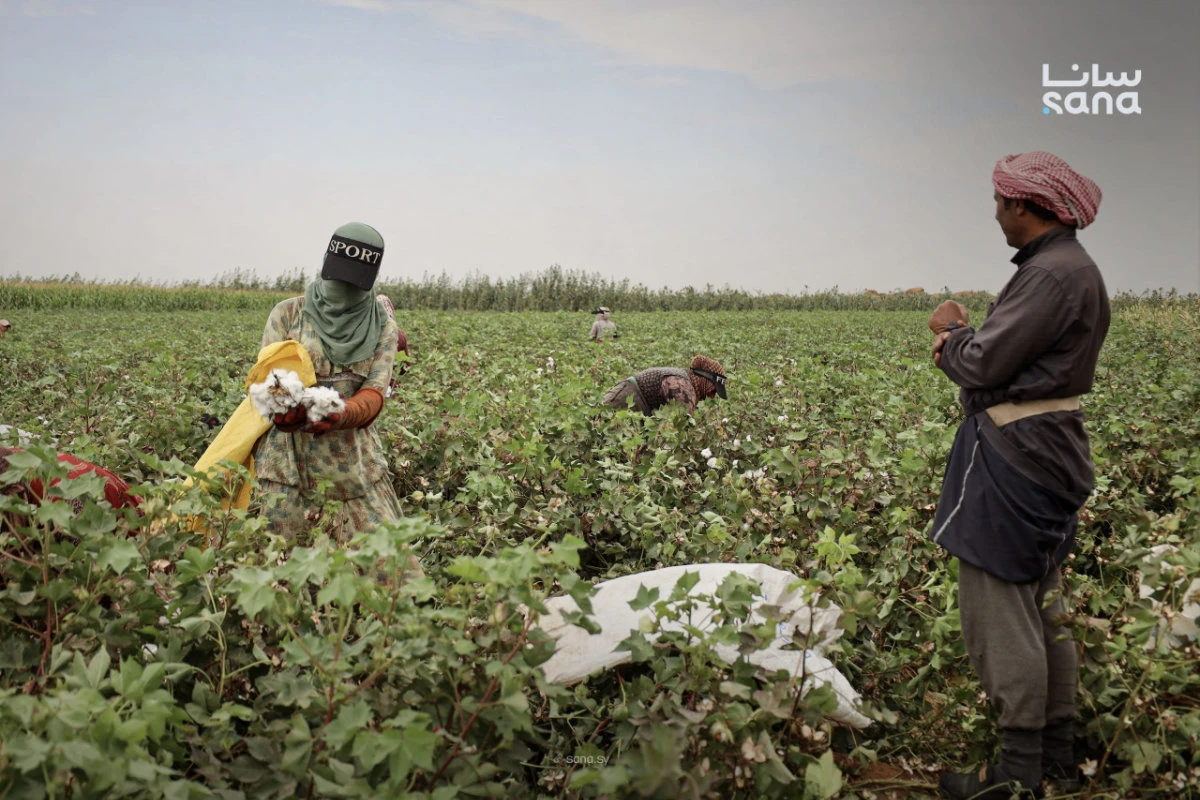
The region is parched and impoverished, suffering sustained economic problems from a yearslong drought.