
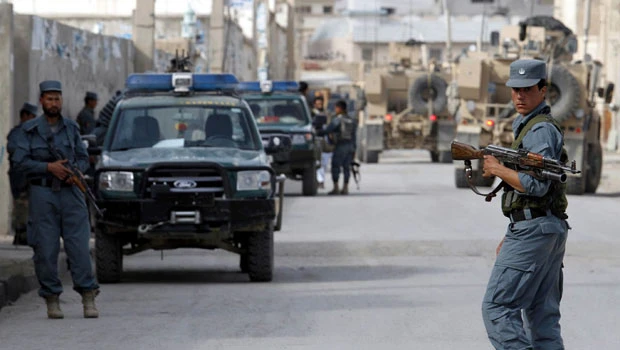
- KANDAHAR, Afghanistan: A suicide bomber killed the police chief of Afghanistan’s Kandahar province on Friday, the second assassination this year of a top official in an area that is the Taleban’s heartland and the focus of a US military surge.
Khan Mohammad Mujahid, one of the most prominent government targets in one of Afghanistan’s most dangerous provinces, was killed in his office in tightly-protected police headquarters, said Zalmay Ayoubi, a spokesman for the provincial governor.
The attack comes months before the start of a critical transfer of security responsibilities from foreign to Afghan forces, and after NATO-led troops claimed progress in ousting insurgents from long-term strongholds around Kandahar city.
It was not immediately clear how the bomber smuggled his explosives through several layers of security meant to separate Mujahid and other senior policemen from would-be assassins.
Police headquarters is in the center of Kandahar, near the city hall and close to where Deputy Governor Abdul Latif Ashna was killed in a January, by a suicide attack on his convoy. Both of the dead men were Pashtuns from the Alokozai tribe.
Mujahid had survived two previous attacks, one on his home and one on his motorcade as it traveled through the city.
The Taleban claimed responsibility for his assassination.
The latest attack shows the Taleban are still able to mount sophisticated raids in the center of Kandahar, which gave birth to the insurgency and which has been a focus of military efforts by the United States and international coalition allies.
But the NATO-led international security force said the deaths did not change the overall momentum of the war.
“Despite setbacks in Kandahar and Helmand last year, insurgents retain the ability to conduct spectacular attacks and assassinations,” a spokesman for international coalition forces said.
“We expect them to fight hard using such cowardly tactics, but they have lost key safe havens.”
Kandahar province is the spiritual heartland of the Taleban and has seen heavy fighting over the last year as a beefed-up NATO-led force tries to reclaim control of the city and the lush farmlands that surround it.
Tens of thousands of foreign and Afghan troops have run “clearing” operations in some of the country’s most volatile districts, while Afghan police, mentored by foreign trainers, formed security perimeters inside the city.
But while the city has seen a drop in large-scale attacks over the past year, militants have managed to step up a campaign of targeted killings, particularly against government figures, which makes it hard to recruit officials.
In addition to the assassinations, at least a dozen people died when protests earlier this month denouncing the burning of a Qur'an by a fundamentalist US preacher turned violent.
Demonstrators shouted pro-Taleban slogans and carried white Taleban flags on the march, which officials said was infiltrated. Police were among the dead.
Three suicide bombers also attacked a police training base in Kandahar this month, using an ambulance packed with explosives. Six Afghan policemen and soldiers died.
President Hamid Karzai condemned the attack, in which he said two other policemen died, but blamed foreign meddling rather than Afghan insurgents, despite the Taleban claim.
“The enemies of Afghanistan, instructed by their foreign masters, want to target influential people to succeed in their vicious objectives,” Karzai said in a statement.