- RIYADH/SANAA: Abdullatif Al-Zayani, secretary-general of the six-nation Gulf Cooperation Council (GCC), met with Yemeni President Ali Abdullah Saleh in Sanaa on Saturday and discussed arrangements for signing a GCC-brokered deal for the president to step down.
"President Saleh welcomed the GCC initiative to establish peace and stability in Yemen and protect its territorial integrity," the Saudi Press Agency said, adding that Saleh emphasized the need to implement the initiative as a package rather than putting emphasis on particular clauses.
Al-Zayani earlier held brief talks with caretaker Foreign Minister Abu Bakr Al-Qirbi on his arrival in Sanaa.
Al-Zayyani flew to the Yemeni capital on Saturday as Saleh said through a close ally that he was backing out of the deal.
Abed Al-Jundi, a close Saleh ally, said the president objected to signing the agreement, saying it should be signed by the leader of his political party, the Ruling Party Congress. He added that Saleh also wanted to ensure that he would remain president to oversee a 30-day transition period after signing the deal.
A leading opposition member, Mohammed Basnadwa said they subsequently told the senior Gulf mediator that they would not agree to any deal unless Saleh signed it first.
In an interview with Russia Today, Saleh said: "The initiative must be carried out as a whole and GCC countries must work on creating a mechanism to implement it without change to any item or clause."
A GCC source, who declined to be identified, said: "Yemen’s ruling and opposition parties would sign the accord tomorrow in Riyadh that would pave the way for Saleh to step down within 30 days." The source refused to comment when asked whether Saleh himself would sign the deal.
Tariq Al-Shami, a member of the ruling General People's Congress, said the party had appointed Abdul Karim Al-Ariani, Saleh's political adviser, to head the party's delegation to Riyadh and sign the deal on behalf of Saleh.
Mohammed Qatatan, a spokesman for Yemen's opposition coalition, said the opposition will reject any deal that does not carry Saleh's personal signature.
GCC foreign ministers are meeting in Riyadh on Sunday and expect both Yemeni sides to sign the deal.
The GCC initiative proposes the formation of a unity government, transfer of power to the vice president and an end to the deadly protests that have rocked the country since late January. Under the initiative, the president would submit his resignation to Parliament within 30 days of signing the deal. This will be followed two months later by a presidential election.
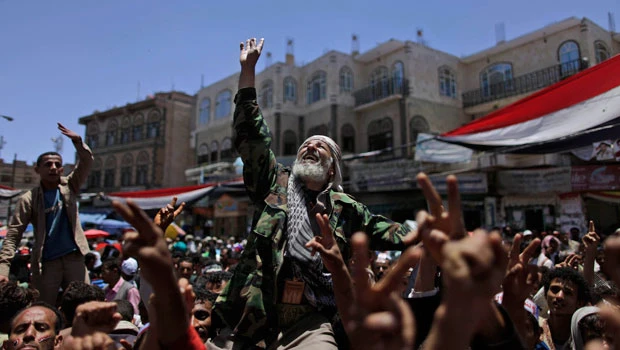
While Saleh hemmed and hawed over the GCC-brokered deal, his forces on Saturday killed four people while pushing hundreds of anti-government demonstrators out of a square where they had been camped, witnesses said.
Army troops backed by tanks and heavy weapons forcibly removed about 1,500 demonstrators from a square where they had been camping in the Al-Mansour district of the southern port city of Aden for about two months. Four demonstrators were killed by gunshot wounds, said activist Wajdi Al-Shaabi.
Several others suffered bullet wounds in the melee and then later when demonstrators angrily marched through several neighborhoods denouncing the move, Al-Shaabi said.
He said a building and a small hostel were on fire, sending plumes of smoke rising over the city. Gunfire and ambulance sirens could be heard throughout the city.
Similar sit-ins have taken place in other cities. More than 140 protesters have been killed since demonstrations began.