- DAMMAM: Although the killing of Osama Bin Laden in an American operation deep inside Pakistan has provided the United States with an excellent political victory, it will have no great effect on Al-Qaeda’s operational capability, popular Pakistani broadcast journalist Dr.
- Shahid Masood said Monday.
“Bin Laden was their target No. 1. It was the hunt for Bin Laden that brought the Americans to Kabul and Kandahar. Now that they have got him, US President Barack Obama has a perfect reason to make an exit from Afghanistan,” he told Arab News in an interview by phone from Pakistan. “It is Pakistan that now faces the real dilemma.”
According to him, Bin Laden’s death will not impact adversely Al-Qaeda. “Bin Laden was inactive for a fairly long time, and the terror group’s command was in reality in the hands of his No. 2 Ayman Al-Zawahiri,” he said.
Masood said Bin Laden’s killing would result in a huge backlash worldwide. “The lower rung or the second tier or the third tier of whatever is left of Al-Qaeda will be more agitated than ever,” he said. “My sources in Pakistan tell me that there will be a violent reaction from organizations that may not necessarily be linked with Al-Qaeda but do share the terror group’s ideology. It is a fact that there are many smaller groups that take their inspiration from Al-Qaeda, and there is every possibility of more Al-Qaeda-like groups emerging on the scene. These are the groups that may react violently to avenge Bin Laden’s death,” he said.
He said it was still too early to speculate on what kind of cooperation if any took place between the Americans and Pakistanis.
“In his speech from the White House, US President Barack Obama made it clear that it was not a drone attack. He said it was a purely American operation in which American troops actually landed and conducted an operation on the Pakistani soil. This will raise lot many questions about the violation of Pakistan’s sovereignty,” said Masood. “Bin Laden’s discovery in Pakistan is not good news for us.”
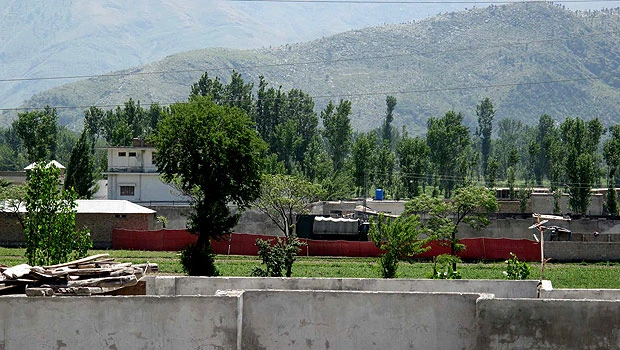
He repeatedly pointed out that the place where the killing took place is far away from the border with Afghanistan. “We are talking about Abbottabad — a beautiful, green hill city nestled among the mountains. It is located in Pakistan’s Northwest Frontier Province that has now been renamed Khyber-Pakhtunkhwa. Our military has one of its most prestigious and finest military institutions called The Kakul Military Academy in this area. In fact, Kakul is a mere half-an-hour away from where the Bin Laden compound was situated. This is not a tribal area. It is an urban center, and most of the prestigious schools meant for children of Pakistan’s elite are located in Abbottabad. For Osama Bin Laden to be found in this area is hugely embarrassing for Pakistan,” he said. “Remember Pakistani Army chief Gen. Pervez Kayani delivered a lecture at this very academy two days ago.”
Masood said there was no real disagreement between the Pakistani military and US military on the issue of Bin Laden. “Both were on the same page vis-à-vis Bin Laden; both saw him as an irritant; the real conflict between the two was on the role of Taleban,” he said. “I see no great fissures in ties between the two sides.”
On the strain between Pakistan and India, he said Bin Laden and Al-Qaeda were never a factor. “India has complained about organizations such as the Lashkar-e-Taiba and Jaish-e-Muhammad which were in existence long before Al-Qaeda emerged. Therefore, despite all the bluster from New Delhi, my understanding is that there will be no adverse impact on Pakistan-India ties.”
However, Masood said, there would be a lot of embarrassment for Pakistan when answers emerge to key questions such as: What role did Pakistani security agencies play in the operation? Who provided the intelligence — and to whom? If Pakistan had the intelligence, why did it not carry out the operation itself? Was Pakistan informed after the American troops had already landed in Abbottabad?
“It is pertinent to note that Obama praised Pakistani President Asif Ali Zardari but not the Pakistani security forces or the Pakistani military,” he pointed out. “Since we have not heard from the military and our intelligence agency, the ISI, we will have to wait for answers to all the key questions, and that will determine people’s reaction,” he said.
In the past, Masood pointed out, it was always mentioned that Pakistani forces were involved in all anti-Al-Qaeda operations. “During the days of Pervez Musharraf when high-profile Al-Qaeda members were arrested such as Khalid Sheikh Muhammad and Abu Zubeida, it used to be mentioned that actionable intelligence was provided by the Americans and that the actual operations were conducted by the Pakistanis themselves. Here we have American troops conducting the operation all by themselves and actually taking away the body of Bin Laden. This will have far-reaching implications, if not consequences,” he said.
The well-known journalist, who rode a crest of popularity in the post-9/11 Muslim world, said Bin Laden’s death would not change anything on the ground in Afghanistan. “The fight in that country is being led by young Afghans. Al-Qaeda may have been involved in a couple of attacks, but the actual fight there is being led by the Taleban. Their leadership is intact. Mullah Omar is alive, and so is key fighter Sirajuddin Haqqani. For the young Taleban, Osama was like an elder figure, a charismatic figure. In his death, they will fight with greater vigor and with greater vengeance.”
Masood admitted that Pakistan would be under immense pressure. “The Americans will now insist that Mullah Omar is also in Pakistan, Al-Zawahiri is also in Pakistan. These pressures are to be expected. However much we say we don’t have them that will not be listened to. Pakistan’s military and civilian craftsmanship will be tested to the fullest in the coming days.”
Another important factor in the kind of reaction that might follow will depend on how the Americans treat Bin Laden’s body. “So far they have said they are according it the respect that a dead man deserves,” said Masood. “They have also promised to bury him in accordance with his faith. However, a lot will depend on what kind of videos of this operation emerge. We have seen how the Americans dealt with Saddam Hussein after he was caught and how Saddam Hussein was mistreated while being hanged. Those videos came in very handy as recruitment tools for militant groups in the Arab and Muslim world.”