- If eyes are the portals to your soul, then the mouth speaks for itself.
The oral cavity is the most verbal and expressive part of your body. Unfortunately, however, it is also the most highly ignored and disregarded. Since we use it to eat, chat, smile, scream, frown and express a million other things, it only becomes that much necessary to keep it spruced up all day long.
Prophet Mohammed (peace be upon him) taught us that the mouth is the pathway of the Qur’an and has left us with numerous hadiths stressing the importance of good oral hygiene. Everyone desires a clean, sweet-smelling mouth, as stained teeth and heavily pungent mouth odors are a huge turn-off. You don’t want people maintaining a 100 yards distance every time you come in their vicinity.
Chewing gums, mouth fresheners/sprays and toothpastes are temporary solutions for treating malodor. In most cases, every individual requires dental scaling as part of their routine dental treatment to rid the teeth of tartar accumulations and loose stains.
Let’s run some FAQ to make your next dental appointment a little less nerving.
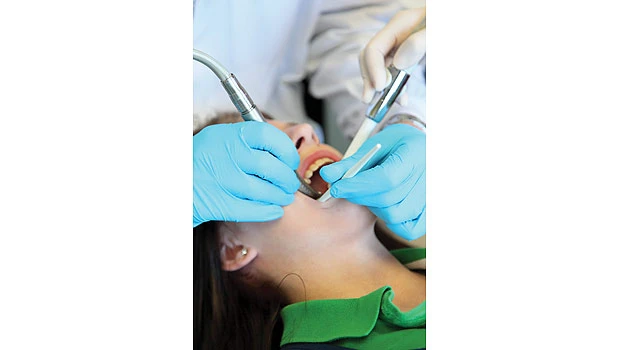
It is an in-office dental procedure that is performed by most dentists to remove
plaque (loose debris) and tartar (hardened debris which cannot be removed with regular tooth brushing) from the tooth surfaces both above and below the gums and other stains that may have formed due to nicotine addictions, coffee and tea bingeing.
The debris from food, which gets accumulated on most teeth surfaces, begins to harden into tartar if not removed immediately from the mouth through thorough rinsing, brushing and flossing. This provides the perfect medium for micro-organisms to harbor on tooth surfaces that later cause symptoms like bleeding and swollen gums, halitosis (foul odor), pocket formations in and around the teeth, and in severe cases, results in bone loss and loosening of teeth.
Recent research has revealed that tartar accumulation poses a risk factor in the development of heart diseases, pre-mature/low-weight birth of infants, strokes, lung diseases and other respiratory infections. The theory has been in circulation for long but neglected by the medical fraternities at large. Today, there is a proven association of total body well-being with oral health supported by new emerging scientific data.
It is a 15-20 minute procedure, sometimes taking even less, as it is case-specific. In cases of heavy tobacco stains and tartar, some may require two to three sessions.
Not by most means. A spray type of anesthetic is used to numb the gums prior to commencement of the treatment, so there are no needles involved.
There may be a tingling-pricky kind of feeling if one needs to define the sensation in words. Sometimes, there is occasional bleeding, which again is no cause for worry, since there’s no pain involved and is a natural occurrence.
Routine dental scalings are required every nine months. It is again very case-specific. Some may need it every six months and some only every 12 months. It depends on the rate of tartar accumulation, which directly relates to your food habits, cleaning techniques, presence of dental appliances, physiological health conditions, etc.
Most dentists prescribe a chlorhexidine-based mouthwash.
Regular flossing, after-food rinsing, tooth brushing and tongue scraping should be routine oral care methods.
Don’t forget to include oranges and apples in your regular diet to strengthen the gums and reduce inflammation post dental scaling procedures.
So, stay fit, stay healthy and smile!