- TRIPOLI: NATO bombed Muammar Qaddafi's compound Thursday, hours after the Libyan leader ended doubt about his fate by making his first television appearance since another airstrike killed his son nearly two weeks ago.
The leader of the opposition seeking to end Qaddafi's 41-year rule visited London to drum up aid for his movement. The White House said a senior opposition delegation would be received for the first time in Washington Friday.
Anti-government forces are in control of the east of the country, while Qaddafi's forces control the capital Tripoli and nearly all of the west.
NATO-led forces have hit targets within Qaddafi's Bab Al-Aziziyah compound several times during the conflict, but denied they are targeting the leader himself.
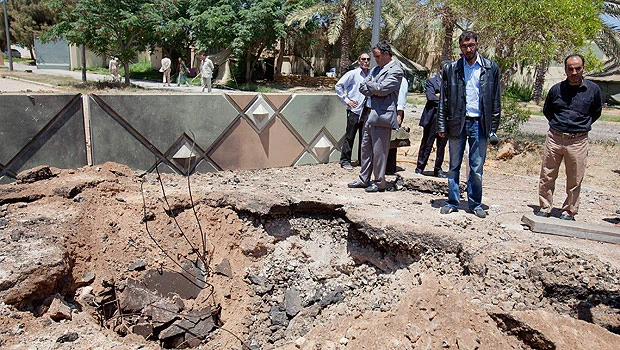
Libyan officials showed reporters around the scene of Thursday's airstrike on the compound. They said three people had been killed and 25 wounded.
The corner of a two-story building was blown away, leaving fragments of concrete on the street below. Deep craters were left in two other locations around the compound.
Government spokesman Mussa Ibrahim said the strikes hit near a spot where dozens of Libyans come every night, some with families, to shout slogans in support of Qaddafi.
He denied the compound contained any military facilities, and pointed to a small park near one of the craters where children were playing on a carousel.
"The NATO alliance is completely bereft of morality," Ibrahim alleged. "No one has the right to say to the people of Libya move away from the cities so we can bombard you."
An official at NATO headquarters said the target it hit was a large command and control bunker complex. "These locations were known to be command and control facilities engaged in coordinating attacks against civilian populations in Libya," said the official.
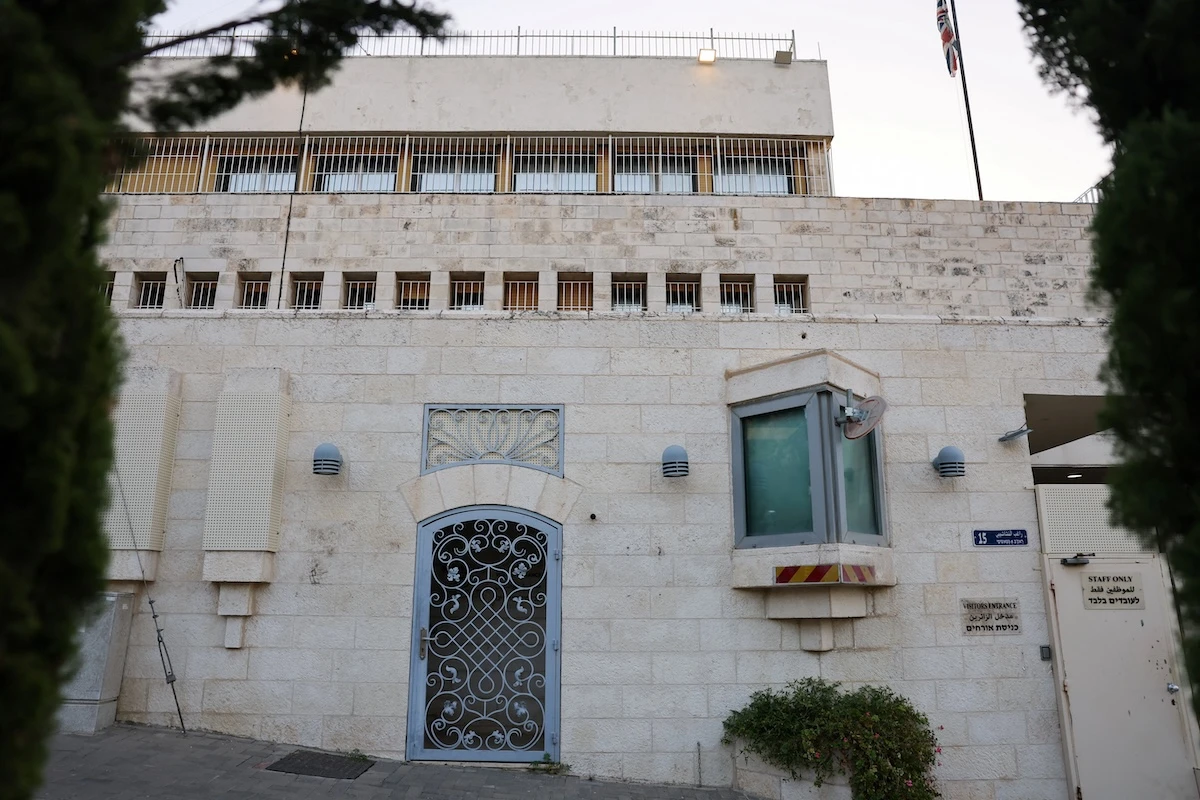
State television reported that the North Korean embassy in Tripoli had also suffered major damage in the NATO strikes, but the NATO official denied it had been attacked.
Earlier, Qaddafi scotched nearly two weeks of speculation over his fate when Libyan television showed him meeting officials in a Tripoli hotel. The Libyan leader had not been seen in public since an April 30 strike killed his youngest son and three grandchildren.
He made his appearance on Wednesday in his trademark brown robe and dark sunglasses, greeting a group of tribal leaders. "You will be victorious," an old man told Qaddafi.
Mustafa Abdel Jalil, chairman of the Libyan National Transitional Council (NTC), met British Prime Minister David Cameron in London and received a pledge of help.
He said Western governments should go beyond offering equipment such as satellite phones and body armor and start providing guns. "We need some lethal weapons," he said.
The White House said it would host a Libyan opposition delegation on Friday for the first time. The invitation, to meet senior administration officials, will help opposition efforts to build their international credibility.
US lawmakers are also working on legislation which would allow frozen Qaddafi assets to be given to the opposition. An opposition official said the law could net them $180 million.