- SANAA: Yemen's opposition signed a Gulf-brokered transition deal Saturday that will ease President Ali Abdullah Saleh out of power within a month, provided he ratifies the agreement as promised on Sunday.
"We signed the initiative in the presence of envoys from the US, Britain, the European Union and the Gulf Cooperation Council Secretary-General Abdul Latif Al-Zayani," the opposition leader, who declined to be named, told Reuters.
A Yemeni official earlier said Al-Zayani was in Yemen to see the opposition sign, and that Saleh and the ruling party would sign on Sunday.
Washington has stepped up pressure on Saleh to sign and implement the deal, and President Barack Obama said in a speech on US policy in the Arab world on Thursday that Saleh needed to "follow through on his commitment to transfer power."
Saleh also appeared to be under pressure to sign ahead of a meeting of GCC foreign ministers expected on Sunday in Riyadh to discuss prospects for Yemen after Saleh failed to sign the deal last week in a last-minute reversal.
Saleh, who appeared willing to finally agree to hand over power despite months of resistance, nevertheless warned Yemen's allies that Al-Qaeda could take over in a political and security vacuum after he steps down.
"If the system falls ... Al-Qaeda will capture Maarib, Hadramaut, Shabwa, Abyan and Al-Jouf (and) it will control the situation," Saleh said, listing provinces where Al-Qaeda's Yemen-based wing has been active.
"This is the message that I send to our friends and brothers in the United States and the European Union ... The successor will be worse than what we have currently," he said.
At a military parade in the capital on the occasion of the 21st anniversary of Yemen's unification, Saleh was also unsparing in his criticism of Gulf neighbors. "The initiative is in fact purely a coup operation but we will deal positively with it for the sake of the motherland," he said of the GCC-brokered plan.
Saleh charged that funding for the anti-regime protests had come from the Gulf states. "Money flows in from abroad, including through some official channels," and also from the Muslim Brotherhood, "especially in GCC countries," according to the president.
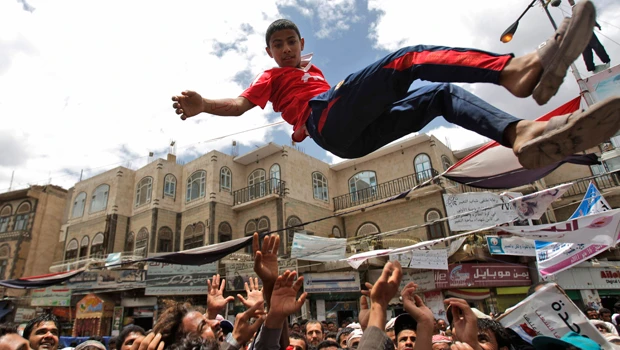
Protesters, frustrated that three months of daily rallies have failed to dislodge Saleh, want him out immediately. They have threatened to step up their campaign by marching on government buildings, a move that brought new bloodshed last week as security forces fired to stop them. Strikes have brought commerce to a halt in many cities.
On Saturday, 35 protesters were wounded as security forces confronted protesters at a university in the Red Sea port city of Hudaida, witnesses said. Dozens were suffering from the effects of tear gas.